Why Funnel Stage Definitions Matter More Than a Pretty Conversion Chart
A funnel chart is only as honest as the stage rules behind it, so fix definitions and date ranges before you export a polished visual.
Open Funnel Chart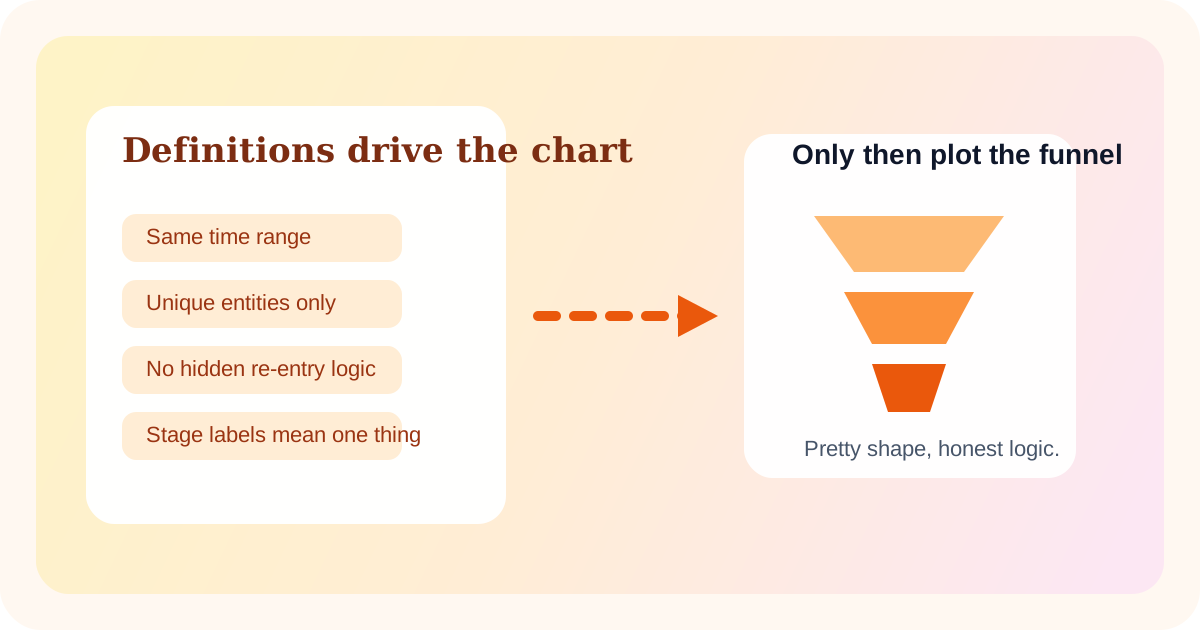
A funnel chart can look persuasive long before it is trustworthy. Clean shapes and descending counts make people assume the stage logic is settled, even when the dataset is mixing different date ranges, counting re-entry twice, or using stage names that hide important qualification rules.
What the chart cannot fix for you
- A stage that includes records which never appeared in the previous stage.
- Counts pulled from different time windows or source systems.
- People, deals, or tickets that can re-enter the flow and get counted more than once.
- Stage names that sound comparable but are defined differently across teams or dashboards.
Why the stage definition is the real data model
The chart is just the rendering layer. The real model is the rule for when something enters a stage, when it leaves, and whether it can appear again later. If those rules are muddy, the funnel shape is polished confusion.
A technical review before you plot
- Confirm that every stage belongs to one ordered process rather than a mix of related but separate statuses.
- Make sure all counts come from the same reporting window.
- Check whether the metric is counting unique entities, events, or stage entries and keep that unit consistent across every step.
- Rewrite labels until someone outside the team could understand what each stage truly includes.
When another chart is more honest
If the process branches, loops, or compares unrelated categories, a funnel may create false clarity. A bar chart, stacked bar, or line chart can tell the story more accurately when the flow is not truly narrowing in one direction.
Related UtilFlow moves
Use Scatter Plot when the real question is relationship rather than sequential drop-off, or Bar Chart when you need category comparison without implying a strict stage progression.
FAQ
Why can a funnel chart look correct even when the data is wrong?
Because descending shapes are visually convincing, even when the underlying stage rules or time windows are inconsistent.
What should stay consistent across all funnel stages?
The entity being counted, the reporting window, and the stage-entry rules should all stay consistent.
When should I avoid a funnel chart?
Avoid it when the process branches, loops, or compares categories that are not really sequential stages in one narrowing flow.