Trace How XML Attributes, Lists, and Text Nodes Become JSON Before the Import Breaks
Use a technical XML-to-JSON guide when a feed, export, or integration looks structured enough on the surface, but the real risk is how attributes and repeated nodes change shape after conversion.
Open XML to JSON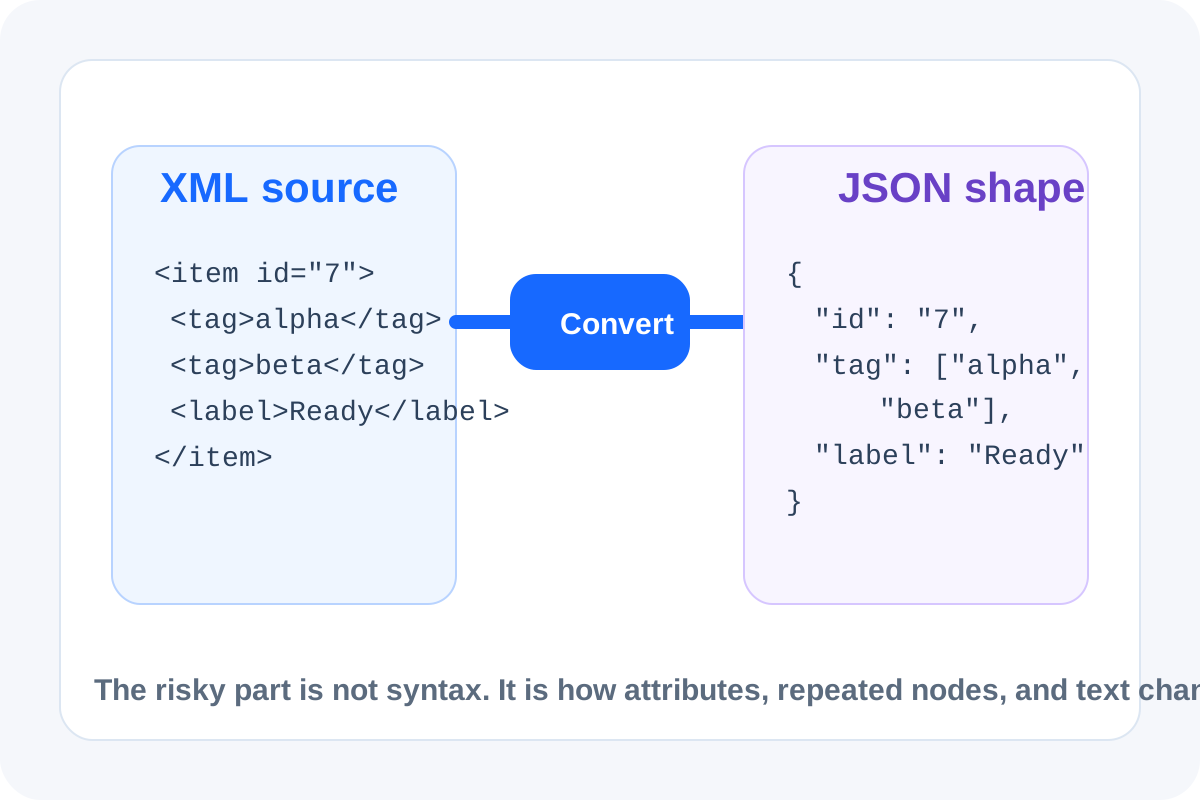
An XML file can look neatly hierarchical and still convert into JSON that surprises the next system. Attributes may become sibling properties, repeated tags may turn into arrays only when they repeat, and mixed text can stop looking like the clean row structure an importer expected. That is why XML-to-JSON work fails less from syntax and more from shape assumptions.
Three technical shape changes to watch
- Attributes often stop behaving like metadata and become normal key-value properties in the JSON output.
- Repeated child nodes may become arrays, which means a field that looked singular in one sample can become plural in another.
- Text content inside an element may end up under a dedicated text key or alongside attributes, which changes how downstream code reads the value.
Why one sample payload is not enough
Many conversions appear correct when you test against a tiny sample that only contains one item, no optional attributes, and no mixed content. The trouble shows up later when the live feed introduces a second repeated node or an attribute that changes the expected object shape. Technical review means testing the structure that will actually show up in production, not the neatest example available in documentation.
A safer conversion workflow
- Convert one realistic XML sample instead of a toy snippet.
- Inspect whether repeated tags became arrays and whether singleton cases still need to be handled as arrays downstream.
- Check how attributes were named and whether they now collide with content keys or importer field names.
- Map the converted JSON into the destination schema only after the actual shape is clear.
- Keep one before-and-after example in the integration notes so the next edit does not reintroduce the same assumption.
What this technical guide is really about
The point is not that XML or JSON is better. The point is that they model structure differently. XML allows meaning to live in elements, attributes, and mixed content. JSON usually pushes you toward explicit object and array shapes. Converting between them is therefore a structural translation, not a cosmetic reformat.
Related UtilFlow moves
If the converted JSON still needs schema cleanup, continue into JSON Formatter or JSON Validator before handing it to an API or importer. If the source XML itself is hard to read first, run XML Formatter before conversion so the real nesting is visible.
FAQ
Why does XML to JSON often break when repeated tags appear?
Because repeated XML elements commonly become arrays in JSON, which changes the field shape that downstream code or importers must handle.
What happens to XML attributes during conversion?
They usually become normal properties in the JSON output, which can change naming, nesting, and how the destination system reads the data.
What is the safest sample to test with?
Use a realistic sample that includes repeated nodes, optional attributes, and real text content so the converted shape reflects production behavior.