Stop Hand-Patching Types After the API Sample Finally Shows the Messy Fields
Use JSON to TypeScript as a problem-solving move when a once-simple response starts returning nulls, nested arrays, or optional branches and the handwritten types are now lagging reality.
Open JSON to TypeScript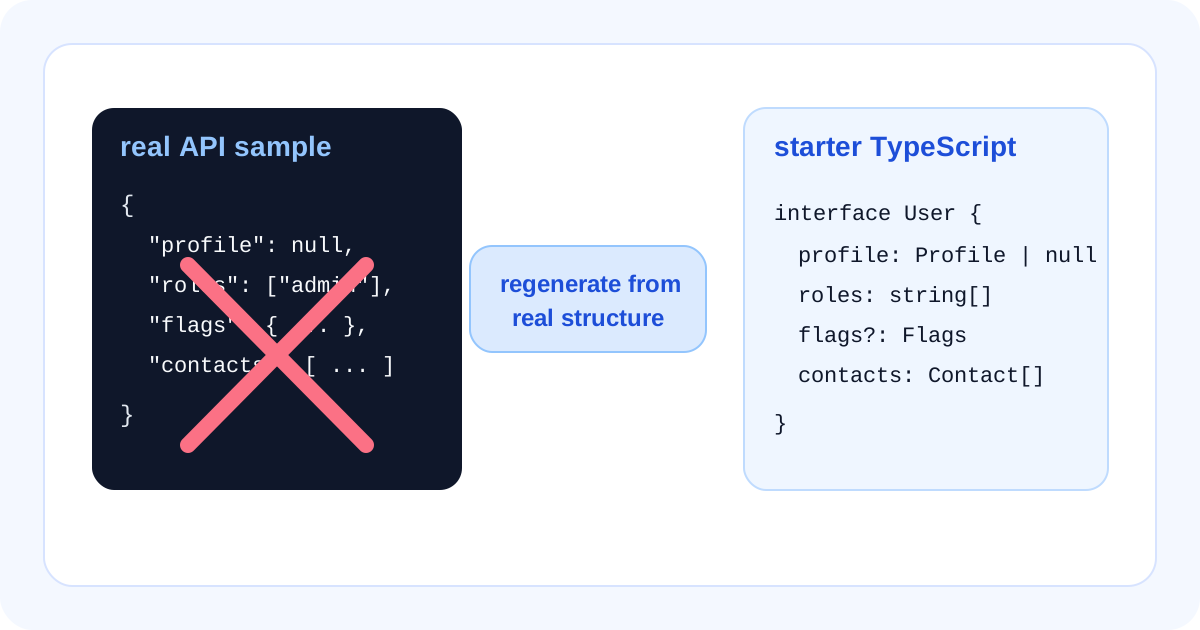
A typed client can look stable right up until one real response exposes the parts the first sample hid. Maybe one field suddenly comes back null, a list becomes nested, a detail object disappears for some users, or an optional block finally shows up in staging. The pain is not only the runtime bug. It is the pile of hand-patched interfaces that no longer reflect the payload you are actually receiving.
How this problem usually starts
- The original interface was written from one ideal sample and never revisited after the endpoint matured.
- Mocks and fixtures kept the type shape looking simpler than the live response really is.
- Several developers patched one or two fields manually, but nobody regenerated the broader structure from a realistic payload.
- The code still compiles, yet downstream checks keep failing because the visible types lag behind the real JSON shape.
What JSON to TypeScript fixes first
It gives you one current structural draft again. That matters because the first debugging job is not perfect domain modeling. It is seeing the actual object nesting, repeated array shapes, and obvious nullable branches in one readable place before you decide which fields should stay broad and which should become stricter.
A cleaner recovery workflow
- Capture one recent, realistic response that includes the branch or field pattern currently breaking your assumptions.
- Generate starter interfaces from that real JSON instead of incrementally patching the old type by memory.
- Compare the regenerated shape to the existing client types so the drift is visible, not guessed.
- Review optional fields, enums, and date-like strings manually before replacing the current definitions wholesale.
- Update the fixtures and tests that still encode the older simpler structure so the mismatch does not come back quietly later.
What this still does not decide for you
The tool does not know the business rules. It cannot tell whether a nullable field is temporary, whether two shapes should really become a union, or whether an ID that looks numeric should be treated as an opaque string. It accelerates structural recovery. The domain judgment is still yours.
Related UtilFlow moves
Use JSON Compare if you need to show exactly how the new response shape differs from the older one before you edit the client. Use JSON Validator first when the captured payload was copied from logs and may have been damaged during the handoff.
FAQ
When should I regenerate TypeScript interfaces from JSON instead of editing them by hand?
Regenerate when the live response shape has clearly drifted beyond one or two field edits and you need the current nesting and optional branches visible again.
Will JSON to TypeScript solve nullable and union decisions automatically?
Not fully. It reveals the observed structure quickly, but you still need to decide how strict the final types should be for your domain.
What JSON sample should I use for this kind of recovery?
Use a recent realistic response that includes the messy fields or optional branches currently breaking your assumptions, not an old idealized fixture.