Parse One Real URL Before You Edit the Wrong Query Param, Path, or Redirect Target
Use a URL parser when a link problem looks simple on the surface but the real issue is buried in the hostname, path, hash, or one query parameter that should not be edited blindly.
Open URL Parser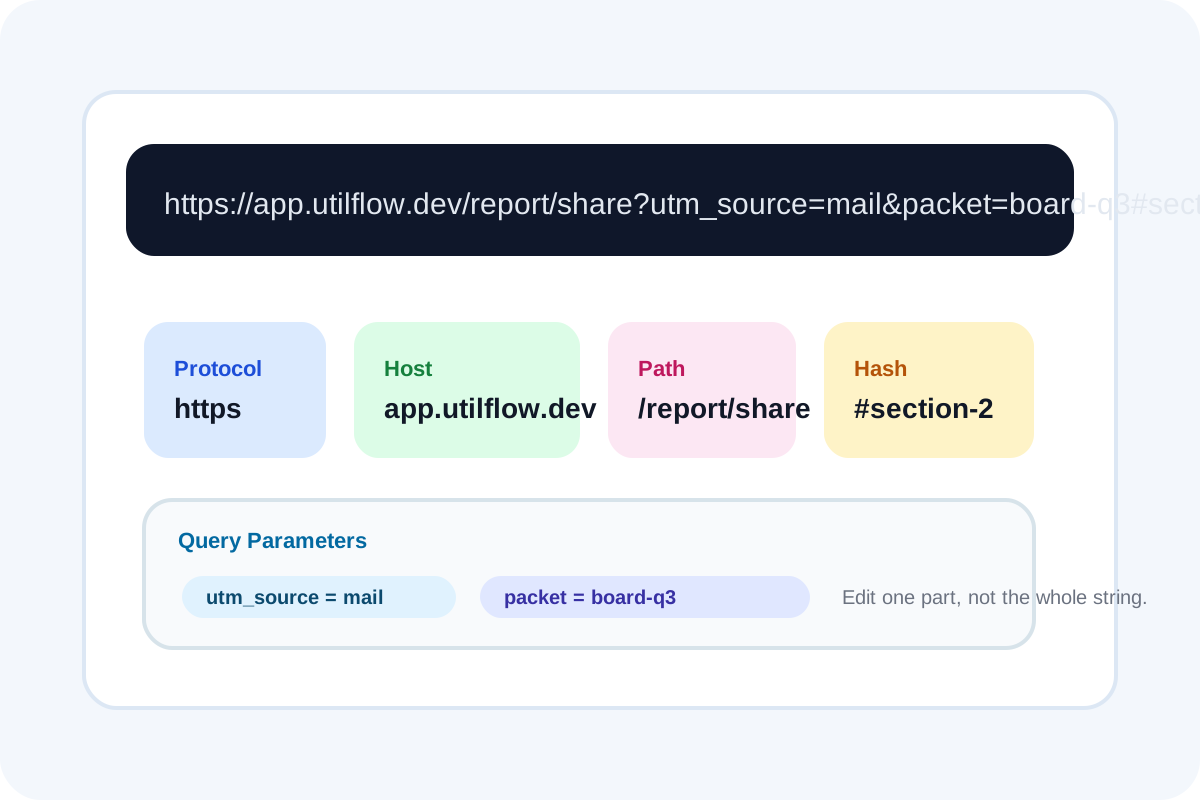
URL bugs often start with someone editing the string as if it were one flat sentence. A campaign link breaks, an API callback misses one value, or a redirect lands on the wrong screen, and the quick fix becomes 'remove that part after the slash' or 'change the source parameter.' That is how teams edit the wrong segment and create a second bug while trying to fix the first one.
A short tutorial for reading the real structure
- Paste one full absolute URL exactly as it appears in the failing link, not a shortened summary of it.
- Check the protocol and host first so you know you are even in the right environment or domain.
- Read the path separately from the query string before deciding whether the issue is routing or parameter-related.
- Inspect each query parameter as a key-value pair instead of scanning the whole tail of the URL visually.
- Check the hash last, because anchor or client-state fragments often look like query data even though servers handle them differently.
Where a parser saves time
- A UTM link looks wrong, but the real problem is a duplicated question mark that broke the query string structure.
- A redirect target works in staging and fails in production because the hostname changed while the path stayed valid.
- An encoded return URL is present, but a team member edits the readable outer URL and never touches the nested destination.
- An API request copied from logs contains both path parameters and query parameters, and only one of them is actually under investigation.
Why this is better than editing in place
Parsing separates the mechanical structure from the business meaning. Once protocol, host, path, query, and hash are broken out clearly, you can change only the field you intended to change instead of reshaping the whole link by accident.
Related UtilFlow moves
If a query value is percent-encoded, send it to URL Encode/Decode next before rewriting it. If you need to confirm how the finished page will appear when shared, move to Meta Tag Generator after the URL itself is clean.
FAQ
Do I need the full URL for reliable parsing?
Yes. A full absolute URL makes it much easier to separate hostname, path, query parameters, and hash correctly.
Can this help with UTM troubleshooting?
Yes. It is a good way to check whether utm_source, utm_medium, utm_campaign, and related parameters are present and correctly attached.
What if the URL contains another encoded URL inside it?
Treat the outer URL structure first, then decode the nested value separately so you do not confuse the container link with the destination it carries.