Generate UUIDs Before Placeholder IDs Leak Into the Real Payload
Use a short UUID tutorial when test records, seeded content, or hand-built payloads need stable unique IDs before fake placeholders start colliding or surviving into production.
Open UUID Generator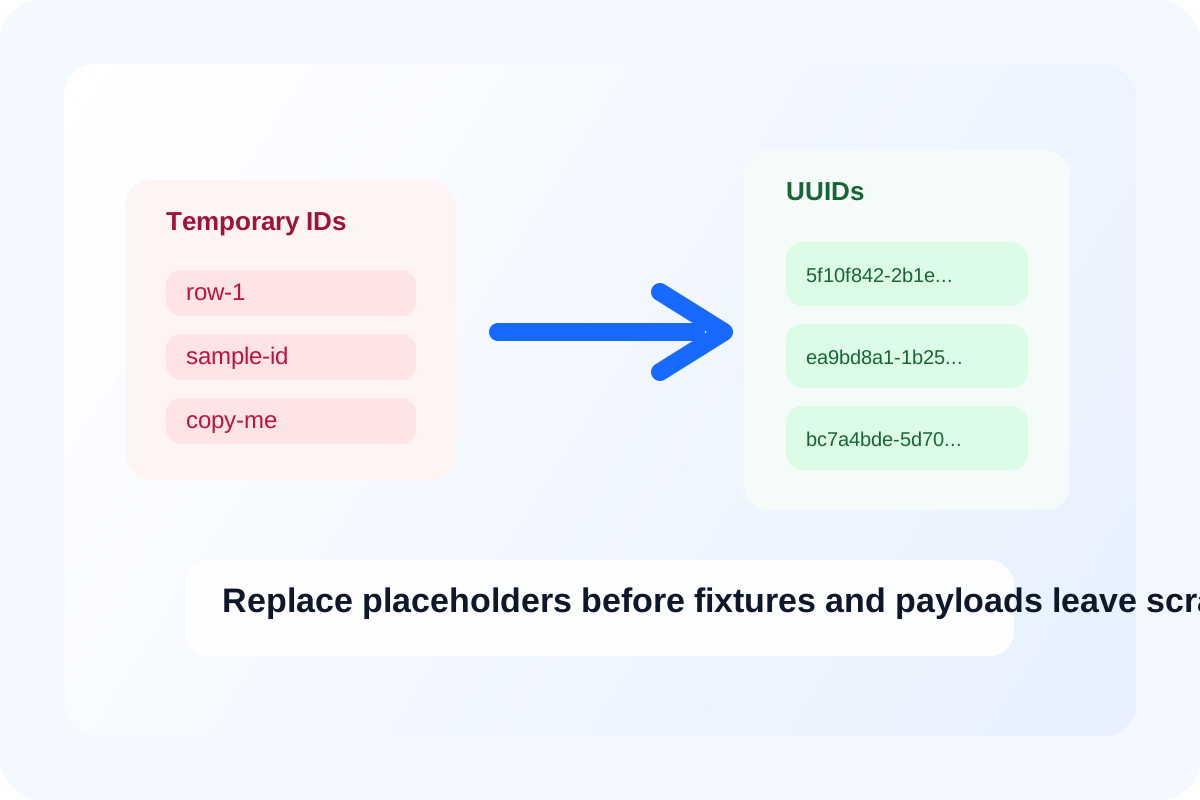
A surprising amount of data work starts with fake IDs that were meant to be temporary. A spreadsheet import gets a column of row-1, row-2, row-3 values. A seed script keeps a copied example object with the same hard-coded identifier. A webhook test payload is cloned three times without changing the record key. The UUID step is small, but it stops placeholder values from becoming real integration bugs later.
A simple UUID tutorial for real work
- List the records or payload objects that truly need their own durable identifiers instead of display labels.
- Generate a fresh UUID for each record rather than copying one working value across the whole batch.
- Paste those UUIDs into the fixture, import sheet, JSON body, or test payload before the data moves into the next system.
- Keep a clear distinction between user-facing names and backend identifiers so you do not overload a readable label to do both jobs.
- Only after the identifiers are unique should you debug validation, linking, or deduplication behavior in the receiving system.
Where this catches mistakes early
- A QA payload looks valid, but every object still shares the same copied example ID.
- A migration sheet needs unique row identifiers before import mapping starts.
- A mock API response is being reused across test cases and should stop pretending one record stands in for many.
- A support engineer wants one exact unique value per record before tracing issues across logs and dashboards.
Why a UUID is different from a label or slug
A UUID is not trying to be memorable. That is the point. Labels, titles, and slugs carry human meaning and often change. Unique identifiers should stay separate from those fields so the record can remain stable even when names, paths, or visible copy evolve.
What this tutorial does not solve by itself
Generating a UUID does not enforce authorization, foreign-key integrity, or business rules. It simply gives each record its own reliable identity. That is still valuable because it removes one class of accidental collision before you spend time debugging a deeper layer.
Related UtilFlow moves
Use JSON Formatter or JSON Validator when the next problem is the shape of the payload rather than the identifiers inside it. If you need to compare two long copied IDs exactly, move to Hash Generator or Text Diff instead of eyeballing them.
FAQ
When should I generate a UUID instead of typing a quick placeholder?
Generate a UUID as soon as the value might leave a scratch note and enter a payload, fixture, import sheet, or test record that another system will actually read.
Can I reuse one UUID across several records in a test batch?
Usually no. Reusing the same UUID defeats the point of creating unique records and can hide collisions until much later in the workflow.
What field should a UUID replace?
It should replace the temporary unique identifier field, not the human-readable title, name, or slug that people still need to understand.