Check Whether One Outlier Is Faking the Correlation Before You Share the Scatter Plot
Use a scatter plot to stress-test a relationship claim before a meeting, memo, or deck turns one unusual point into a misleading story.
Open Scatter Plot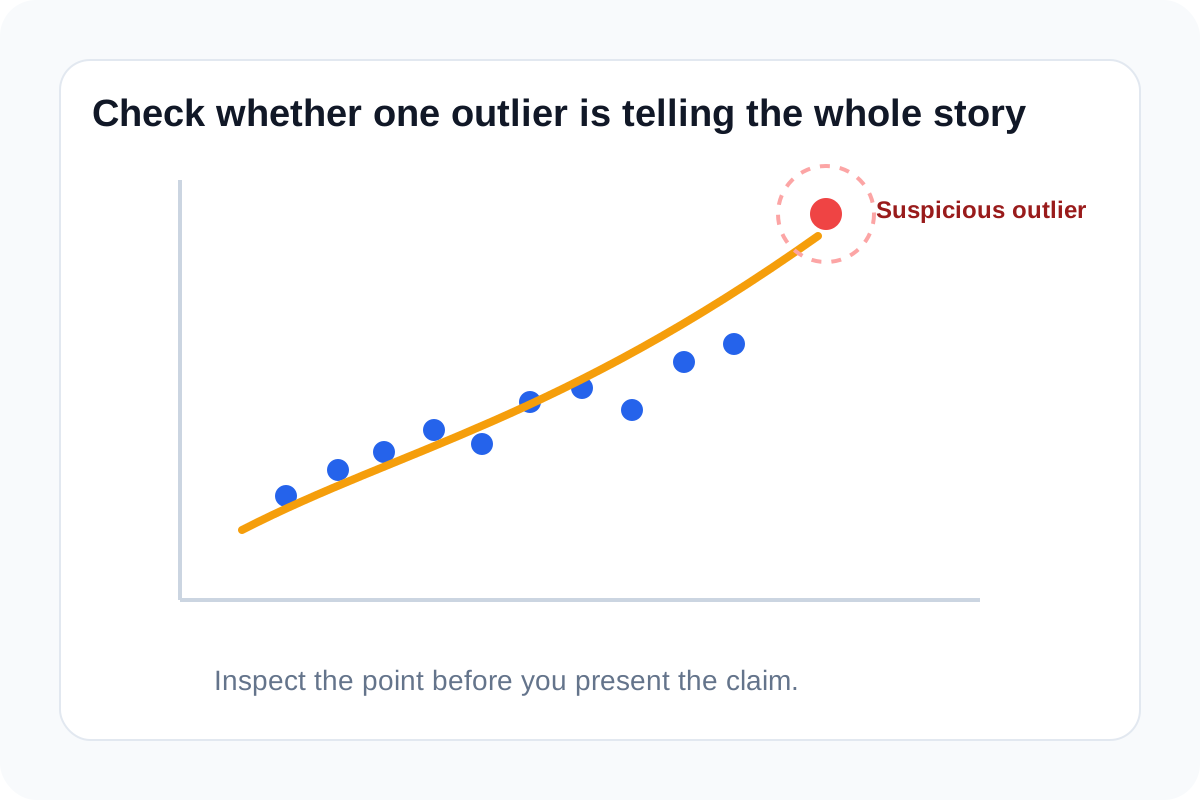
A scatter plot is often built to support a claim like more spend drives more signups or more training hours lead to better scores. The risk is that one unusual point can make the relationship look cleaner or stronger than the rest of the data really supports. Before you share the chart, inspect whether the trend survives without the dramatic outlier.
Why this problem is easy to miss in a table
Raw paired numbers can look harmless in rows because the extreme value is buried among normal observations. The scatter plot makes it visible immediately: one point may sit far from the cloud and pull attention toward a story the underlying pattern cannot actually sustain.
A practical outlier-check workflow
- Paste the paired values exactly as collected so each point still represents one real observation.
- Look for the main cluster first before deciding what story the chart tells.
- Identify points that sit far from the group or appear on a different scale from the rest.
- Ask whether the extreme point is a data-entry mistake, a legitimate special case, or evidence that the dataset should be split into subgroups.
- Only share the chart after the unusual points have been explained rather than left to imply more certainty than the data deserves.
What a suspicious outlier can actually mean
- A typo, unit mismatch, or copied-row error.
- A real but exceptional case that deserves its own annotation.
- Two populations mixed into one chart even though they should be analyzed separately.
- A legitimate signal that the relationship is nonlinear or weaker than the original claim suggests.
The real goal is a safer claim, not a prettier chart
A useful scatter plot reduces the chance of telling an overconfident story from thin evidence. If the relationship weakens after one point is understood properly, that is not a failure of the chart. It is the chart doing its job before the claim reaches a slide deck, meeting note, or decision memo.
Related UtilFlow moves
Use CSV Chart when the data still needs a lightweight import step before you decide on the visual. Move to Line Chart only if the x-axis is really a time sequence, and use Table Generator when the audience needs the supporting rows alongside the chart for review.
FAQ
Can one outlier really change the story in a scatter plot?
Yes. A single distant point can make a weak or mixed relationship appear cleaner and stronger than the main cluster supports.
Should I delete outliers before sharing the chart?
Not automatically. First determine whether the point is an error, a valid special case, or evidence that the data needs a different framing.
What should I do if the scatter plot mixes several populations?
Separate the groups or annotate them clearly so the chart does not imply one relationship across data that behaves differently.