Why Merge PDF Online and Compress a PDF for Free Keep Meeting in Document Packet Work
Use a trend guide when several PDFs need to become one filing packet and current query demand still clusters around merge-first, then size-fix document work rather than abstract PDF management language.
Open Merge PDF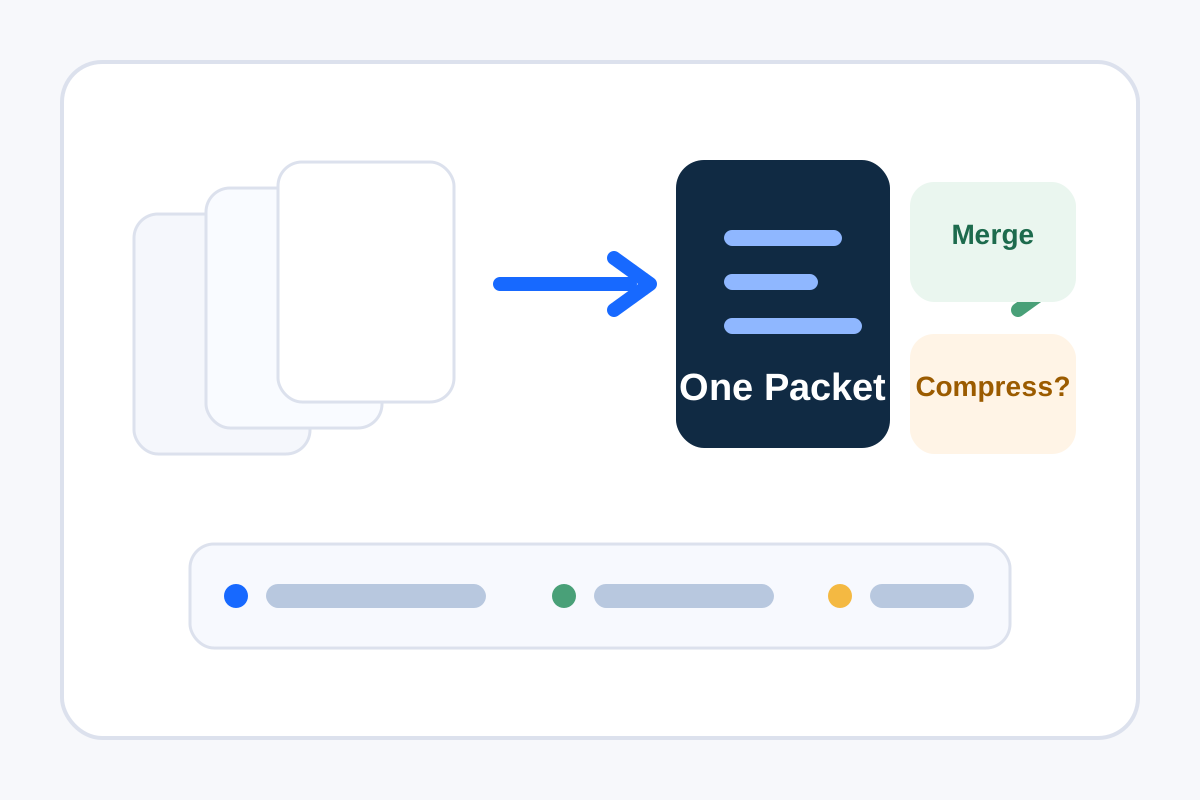
Current PDF search demand still leans toward action phrases, not abstract document-management vocabulary. The packet problem is a good example. People rarely search for 'normalize portable document workflows.' They search for the concrete step they need now, such as merge pdf online, and then often discover the next blocker is size. That is why compress a pdf for free keeps appearing beside merge tasks in real document-packet work.
What the current search context suggests
I attempted live Google Trends verification for these PDF terms on July 28, 2026, but Google Trends returned a rate-limit response. As the closest current query-demand signal, I checked current US keyword pages updated in July 2026 and recent PDF-tool publishing activity. Those sources still point toward merge-first and size-fix tasks as the practical language users reach for when packet work stalls.
Why merge pdf online is the first job
Applications, client packets, procurement bundles, and report appendices often begin as separate source PDFs because they were created by different people or systems. The first operational need is getting them into one ordered file that can travel as a packet. That is why merge pdf online remains a strong task phrase: it matches the actual first fix.
Why compress a pdf for free becomes the next query
Once the packet exists, the next failure is often a size limit. Current search-demand pages around compress pdf and related free-compression wording show that people still ask for size reduction in direct, outcome-focused terms. The workflow implication is simple: merge first so the packet structure is correct, then compress only if the final merged file still fails the destination.
A practical packet workflow from this trend
- Merge the source PDFs in the order the recipient should read them.
- Open the combined file and verify the packet sequence before touching file size.
- Check whether the destination actually rejects the merged file or whether the size worry was only assumed.
- Use compression only if the final packet still exceeds the portal, email, or archive cap.
- Keep the merged file as the structural source of truth instead of editing several separate PDFs after the packet decision is made.
Current sources behind this trend angle
This article uses current query-demand pages for compress pdf and remove pdf pages from seodata.dev, both updated in July 2026, plus Smallpdf's June 24, 2026 guide focused specifically on compress PDF to 1MB. I am inferring workflow relevance from those current signals conservatively rather than claiming an exact Google Trends breakout percentage that I could not verify because of the live rate limit.
FAQ
Why do merge and compression tasks keep appearing together?
Because the first blocker is often packet structure and the second blocker is file size after the packet has already been assembled.
Should I compress the source PDFs before merging them?
Usually no. It is cleaner to assemble the correct packet first, then decide whether the final merged file actually needs compression.
Which current PDF search terms informed this article?
The article was shaped around merge pdf online and compress a pdf for free, with supporting July 2026 query context also reinforcing remove pdf pages for adjacent cleanup workflows.