Send a Clean Partial-Payment Invoice Before the Thread Turns Into What Is This For?
Use a practical invoice problem guide when a deposit, milestone, or split payment is ready to bill, but the real risk is that the client still cannot tell what stage the invoice covers.
Open Invoice Generator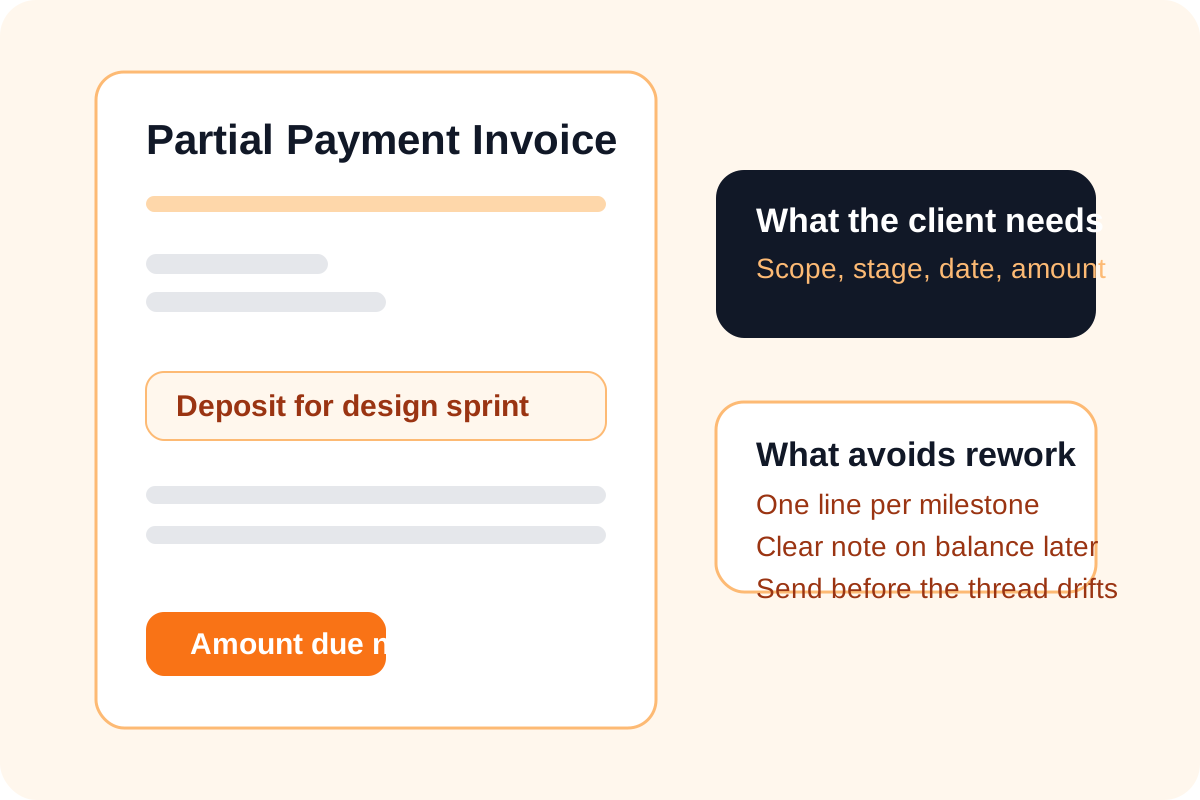
A partial-payment invoice fails less from math than from ambiguity. The amount may be correct, but the client still has to ask whether this is a deposit, a first milestone, a rush fee, or the remaining balance. Once that question lands in the thread, payment slows down and the invoice starts doing explanation work it should have handled on its own.
Where this problem shows up
- A freelance or agency project bills a deposit before the work begins.
- One delivery stage is complete, but the full project balance is not due yet.
- A client approved a scoped add-on and needs a separate bill that does not look like the whole project restarted.
- A split payment plan exists, but the current invoice still needs to explain what this specific amount covers.
What a clean partial-payment invoice needs
- A short description that names the exact stage or milestone instead of leaving the amount context-free.
- One visible due-now total so the recipient does not have to infer the current payment from surrounding notes.
- A note that clarifies whether another balance remains later, which prevents the current invoice from looking like the full final bill.
- Dates and identifiers that make the invoice easy to match back to the agreement or approved scope.
Why this problem keeps recurring
People often reuse a generic invoice template and then rely on the email body to explain the real billing context. That works until the invoice gets forwarded, downloaded, or reviewed later without the original thread attached. The invoice itself should carry enough meaning to stand alone.
A safer billing workflow
- Create the invoice only after you can state the exact stage in one line.
- Label the line item with the milestone, deposit, or installment purpose in plain language.
- Show the amount due now clearly, then mention any remaining balance separately rather than blending both together.
- Send the invoice while the scope and approval are still fresh so the recipient does not have to reconstruct the context later.
Related UtilFlow moves
If the invoice note is getting too long, check Word Counter before sending so the explanation stays readable. If you need a follow-up payment checklist for your own process, continue into Checklist Maker after the invoice is settled.
FAQ
What is the biggest problem with a partial-payment invoice?
The recipient cannot tell what this specific amount covers, which leads to clarification delays even when the number itself is correct.
Should the invoice mention the remaining balance?
Yes, if more money will be due later, because that keeps the current amount from being mistaken for the full final charge.
Why is the line-item description so important?
Because it carries the billing context when the invoice gets forwarded, downloaded, or separated from the original email thread.