Check Reading Time and Speaking Time Before One Script Has to Do Both Jobs
Use a technical reading-time check when one draft may be read in an inbox, spoken in a video, and reused in notes without anyone noticing the pace assumptions changed.
Open Reading Time Calculator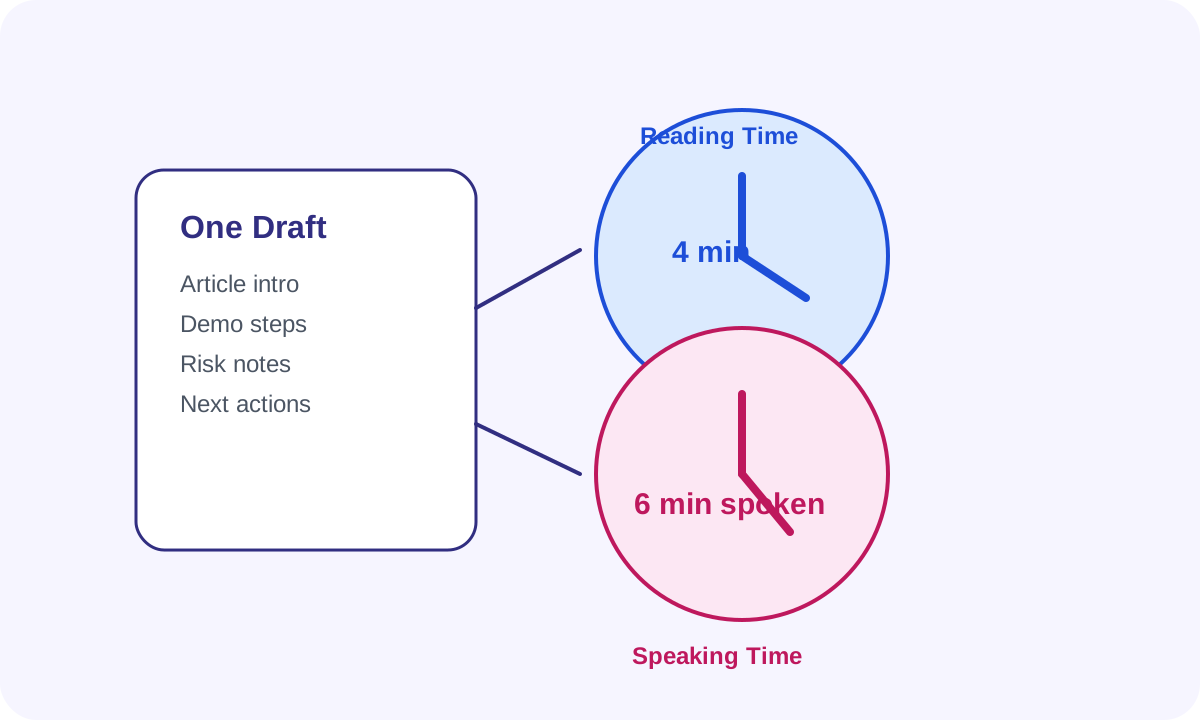
One draft can travel through three different contexts without anyone rewriting it: a product note that becomes a voiceover, a webinar script that becomes a follow-up article, or a help-center summary that also gets read aloud in a demo. The technical mistake is assuming one words-per-minute estimate survives all three uses. It does not.
Why reading time and speaking time diverge
- Silent reading speeds vary, but people usually scan familiar text faster than they can say it aloud clearly.
- Spoken delivery includes pauses, transitions, emphasis, and breath that never appear in a word count.
- Bullets and short headings can be skimmed quickly in reading mode while still requiring deliberate phrasing in narration.
- Dense technical language often slows both modes, but spoken delivery pays the larger penalty.
What this changes in practice
A brief that feels light in an inbox can still overrun a video slot. A script that fits a three-minute recording may feel too sparse as a standalone article. Reading-time estimation is useful because it exposes the audience commitment of the written version, while speaking-time estimation exposes the delivery cost of the spoken version. They are related, but not interchangeable.
A technical timing check
- Paste the near-final draft rather than an outline so the estimate reflects real connective language.
- Check the reading-time estimate for the written audience first, then compare it with the speaking-time estimate for the recorded or live version.
- Adjust the pace assumption when the material includes demos, quotes, or terms that force slower delivery.
- Cut or split sections based on the medium that is actually constrained instead of treating all formats as one average reader.
- Recheck after edits because examples and lists often change spoken length more than people expect.
Where teams misread the signal
The estimate is not a promise of exact duration. It is a planning signal. If the script supports compliance, training, or customer handoff, the safer move is to treat the number as an early warning that the draft needs one more pass before publication or recording.
Related UtilFlow moves
If the script came out of a PDF handout first, extract and clean the text before measuring it. If the next step is a review task list, move from the timed draft into Checklist Maker once the length is realistic for the audience.
FAQ
Why is speaking time usually longer than reading time?
Because spoken delivery adds pauses, emphasis, and breathing, and listeners cannot skim past familiar sections the way silent readers can.
Should I trust one average words-per-minute number for every script?
No. The right pace depends on the audience, the density of the content, and whether the delivery is conversational, instructional, or highly technical.
When should I check both estimates?
Check both when one draft may be reused across written and spoken formats, such as newsletters, voiceovers, webinars, or onboarding content.