Treat joules, kWh, BTU, and calories as different systems before you compare the wrong energy number
Use an energy converter technical guide when the hard part is not calculation but understanding which energy unit the source actually represents.
Open Energy Converter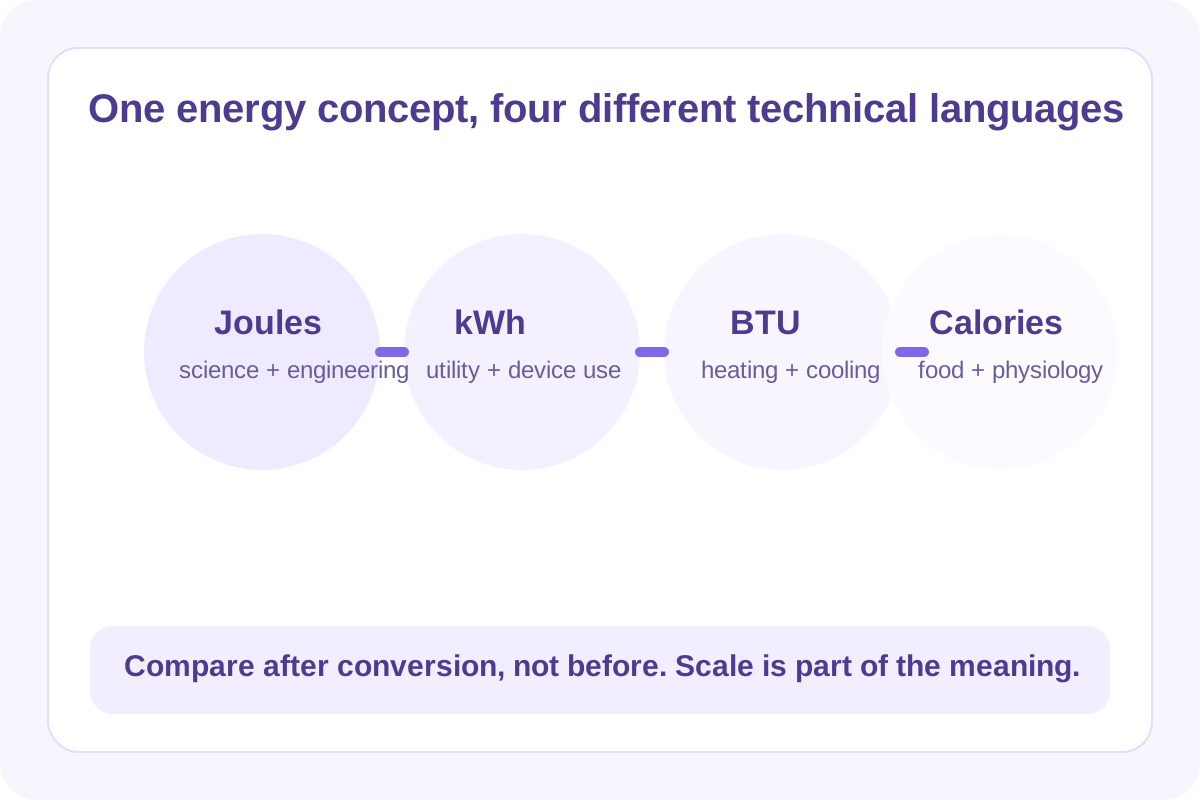
Energy units feel interchangeable until the context changes. A heating specification uses BTU, an electricity bill uses kilowatt-hours, a physics problem uses joules, and a nutrition label uses calories or kilocalories. The values all describe energy, but they belong to different systems and scales, which is why direct comparison without conversion leads to nonsense surprisingly fast.
What these units are actually doing
- Joules are the SI baseline for energy and show up in science, engineering, and low-level technical references.
- Kilowatt-hours describe accumulated electrical energy over time, which is why they appear in utility and device-usage conversations.
- BTU is common in heating and cooling equipment, where the surrounding specs often assume an HVAC audience.
- Calories and kilocalories show up in food, physiology, and some educational material with naming conventions that confuse non-specialists.
Why one energy number can look much bigger than another
The size of the number says more about the unit than about the underlying amount of energy. A kilowatt-hour is 3,600,000 joules, so the same thing will naturally look tiny in kWh and huge in J. That is not disagreement in the data. It is a change in scale.
A useful technical reading sequence
- Identify the source context first: power bill, appliance sheet, heating spec, nutrition label, or classroom formula.
- Convert only after you know whether the unit expresses electrical use, heat-transfer convention, or food energy notation.
- Compare values after they share the same unit, not before.
- Keep the converted value with its destination label so later readers do not assume the original system.
Where calorie language trips people up
Many people say calorie when the label or lesson effectively means kilocalorie. That naming shortcut is common enough to be practical, but it still creates confusion in technical comparisons. A converter is helpful here because it forces the units back into explicit form.
Related UtilFlow moves
If the problem is instantaneous power rather than accumulated energy, move to Power Converter. If the next handoff is fuel efficiency rather than stored or consumed energy, Fuel Economy Converter is the more relevant tool.
FAQ
Why convert energy units before comparing values?
Because the same amount of energy looks radically different in joules, kilowatt-hours, BTU, and calories, so raw numbers are misleading until the units match.
Is a kilocalorie the same as a calorie?
In many nutrition contexts people say calorie when they mean kilocalorie, but technically one kilocalorie equals 1000 small calories.
When is an energy converter most useful?
It is most useful when values move between utility, HVAC, engineering, nutrition, or classroom contexts that each default to different energy units.