Compare MPG, L/100km, and km/L Before You Misread a Vehicle's Efficiency
Use a fuel economy converter when listings, reviews, and fleet notes switch units and make one car, van, or route look better than it really is.
Open Fuel Economy Converter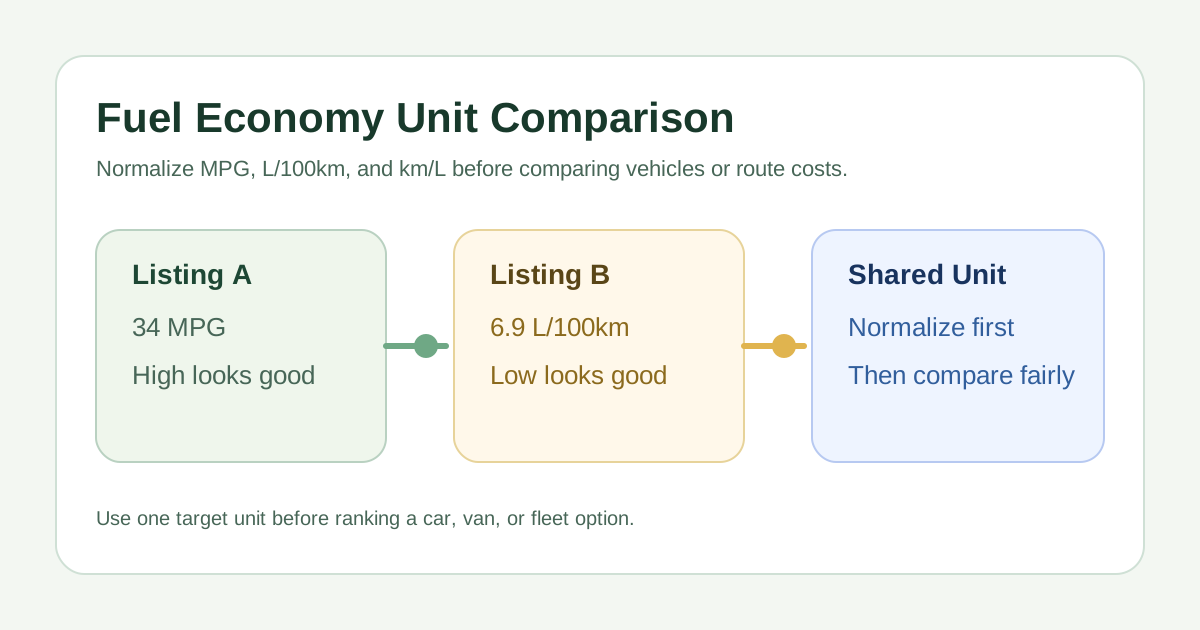
Fuel-efficiency comparisons go wrong early when the units are mixed. A car review may use miles per gallon, a rental quote may use liters per 100 kilometers, and an internal fleet sheet may use kilometers per liter. The numbers look different enough that people start comparing impressions instead of comparing the same measurement.
Where this problem shows up
- Comparing vehicle listings from different countries or marketplaces.
- Checking whether a rental, delivery route, or company car actually fits the fuel budget.
- Standardizing efficiency notes inside a fleet or procurement spreadsheet.
- Explaining the same vehicle spec to teammates who are used to different unit systems.
Why the raw numbers feel misleading
These units do not rise and fall in the same intuitive way. Higher mpg looks better, but lower L/100km looks better. That inversion is exactly where mistakes happen. A quick conversion removes the unit logic trap so the real comparison can start.
A safer comparison workflow
- Pick one target unit for the whole discussion before you compare anything.
- Convert every quoted efficiency figure into that shared unit.
- Label the converted values clearly in your notes so nobody switches back to the original unit by accident.
- Only after the numbers are normalized, compare route cost, tank range, or vehicle class tradeoffs.
What the converter does not decide for you
Fuel economy is only one part of the decision. Driving conditions, payload, maintenance, and fuel price still matter. The tool solves the first problem: making sure the comparison itself is numerically fair.
FAQ
Why convert fuel economy units before comparing vehicles?
Because mpg, L/100km, and km/L can make similar vehicles look different until the same measurement is expressed in one shared unit.
Why does lower L/100km mean better efficiency?
Because that unit measures how much fuel is consumed over distance, so a smaller number means less fuel used for the same trip.
What should I compare after converting the units?
Compare operating cost, route range, vehicle class, and real driving conditions after the efficiency values are normalized.