Scale a Recipe Before Cups, Spoons, and mL Drift Apart
Use a cooking converter tutorial when one recipe moves between cups, tablespoons, teaspoons, and milliliters and the real risk is quietly changing the ratio.
Open Cooking Converter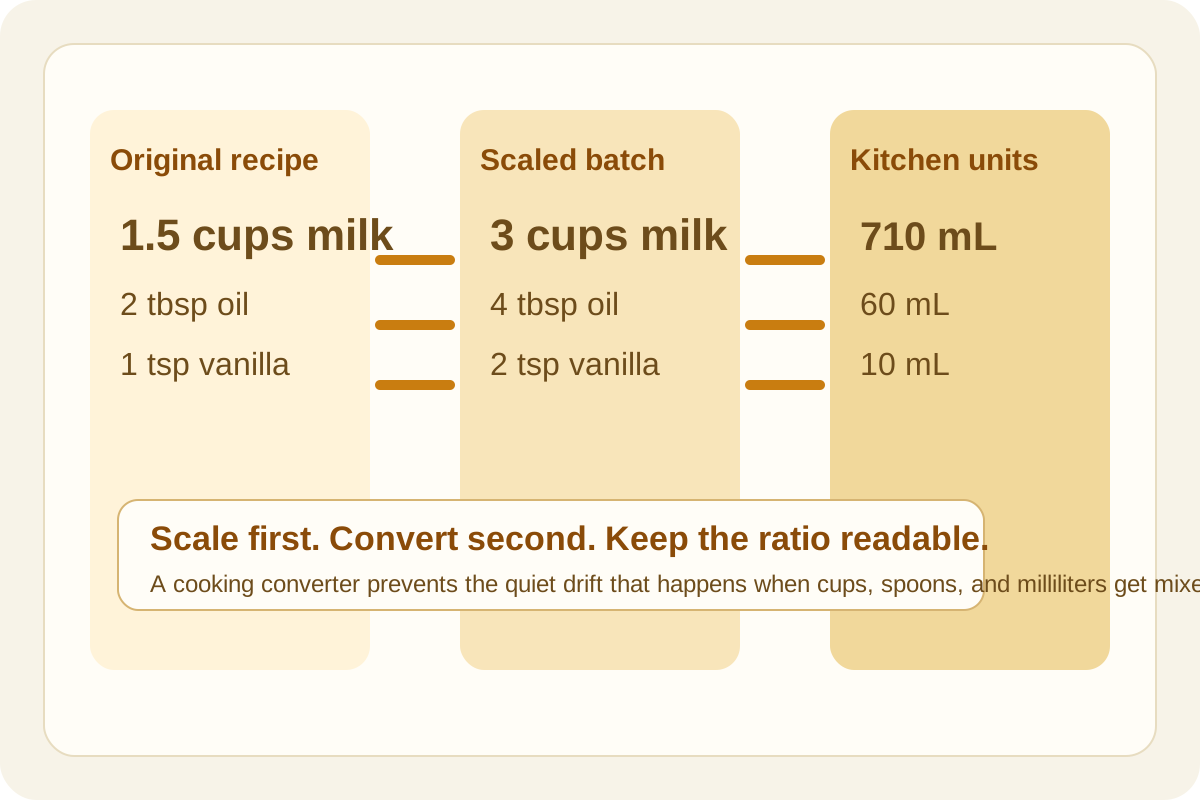
Recipe mistakes often start before the oven does. One note says cups, another says tablespoons, the measuring jug is marked in milliliters, and somebody decides to double the batch halfway through prep. A cooking converter is useful here because the hard part is not arithmetic alone. It is keeping the ingredient ratio stable while the units keep changing around you.
A practical kitchen tutorial
- Start from the recipe's original unit instead of converting from memory. If the recipe says 1.5 cups, treat that as the source of truth.
- Convert one ingredient at a time when you move between cups, tablespoons, teaspoons, fluid ounces, and milliliters.
- If you are scaling the recipe, scale first and convert second so you do not compound rounding mistakes.
- Write the final value beside the ingredient before moving on, especially for liquids and small spoon measurements.
- Keep one reference version for the full recipe so the batch can be repeated later without reverse-engineering your substitutions.
Where recipe scaling usually goes wrong
- A half tablespoon gets guessed as a splash instead of being converted into teaspoons or milliliters.
- The recipe is doubled, but one ingredient is converted before scaling while another is scaled before converting.
- A metric measuring jug is used with an imperial recipe and the cook starts approximating instead of checking the units directly.
- A shopping or prep note drops the original unit label, so the next person cannot tell whether the number was cups, tablespoons, or mL.
Why the original unit still matters
Even when the final prep happens in milliliters or teaspoons, the original unit tells you how the recipe was designed. Keeping that source visible helps you catch a suspicious conversion before it turns into a thin batter, an over-salted sauce, or a batch that cannot be repeated.
Related UtilFlow moves
If you are also scaling the ingredient cost or package weight, move to Weight Converter next. If the problem is oven temperature rather than volume or spoon measurement, switch to Temperature Converter before the cooking step begins.
FAQ
Should I scale a recipe before or after converting the units?
Scale first and convert second when possible, because it keeps the arithmetic anchored to the recipe's original ratio.
Why use a cooking converter instead of estimating spoon measurements?
Because small spoon differences add up quickly in baking, sauces, and concentrated ingredients where ratio matters more than rough volume.
When is a cooking converter most useful?
It is most useful when a recipe moves between cups, tablespoons, teaspoons, milliliters, and liters or when a batch size changes mid-prep.