Read PSI, Bar, and kPa Correctly Before a Pressure Spec Goes Wrong
Use a pressure converter when one document speaks in psi, another uses bar or kPa, and the real risk is applying the right number in the wrong unit.
Open Pressure Converter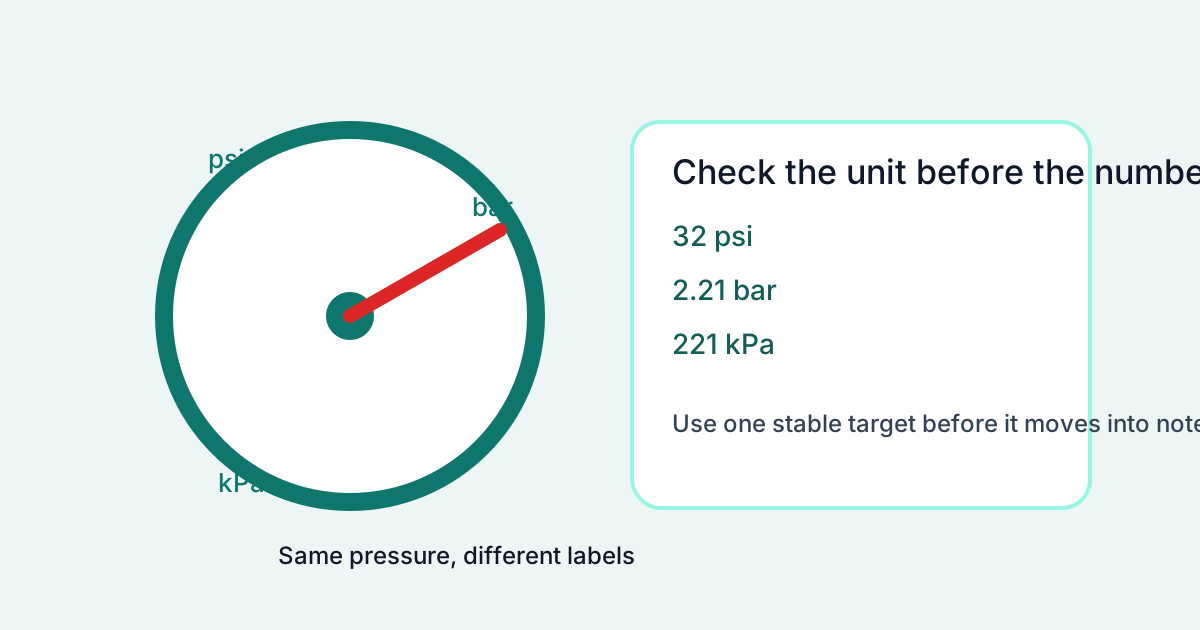
Pressure mistakes rarely come from hard math. They come from mixed labels. A tire sidewall shows one unit, a workshop sheet uses another, and the pump or regulator displays something else entirely. The number may look familiar enough to trust, which is exactly why a quick conversion check matters before a spec is applied with too much confidence.
Where this problem shows up
- Vehicle or bike tire targets shared across regions that label psi, bar, or kPa differently.
- Compressed-air, tank, or equipment notes copied between supplier docs and local maintenance sheets.
- Product specs where one team talks in bar and another documents thresholds in kPa.
- Classroom, workshop, or field calculations where the right pressure is known but the displayed unit changes.
Why the mistake is easy to make
Pressure numbers often look plausible in more than one unit system. That means a wrong reading can survive a quick sanity check. The danger is not only bad arithmetic. It is false familiarity.
A practical check before you trust the label
- Start from the value printed in the source document or on the equipment, not from a remembered approximation.
- Convert into the unit shown on the target device so you only compare like with like.
- Keep the original unit beside the converted result when you write the value into a note, checklist, or handoff.
- If the number still looks surprising after conversion, verify the context before acting on it.
The real goal is safe alignment, not conversion speed
A pressure converter helps because it keeps the meaning attached to the value. Once the unit mismatch is gone, you can decide whether the target is sensible for that tire, tank, or system instead of debating whether psi and bar were mixed up.
Related UtilFlow moves
If the spec sheet also mixes temperature or volume units, keep the companion converters nearby so the entire setup note uses one consistent system before it is shared.
FAQ
Why convert pressure units before using the number?
Because the same target can be expressed in several unit systems, and reading the right number in the wrong unit can still look believable.
Should I write both the original and converted units?
Yes when the value moves into a checklist, message, or maintenance note, because it preserves traceability and reduces repeat confusion.
When is a pressure converter most useful?
It is most useful for tires, pumps, shop equipment, supplier specs, and any cross-region handoff where psi, bar, and kPa appear together.