Read Percent Change Correctly Before Growth, Discount, and Margin Start Pretending to Match
Use a percentage problem guide when one rate looks familiar but the underlying question is actually change, share, markup, discount, or margin, and the wrong percent logic starts sounding plausible.
Open Percentage Calculator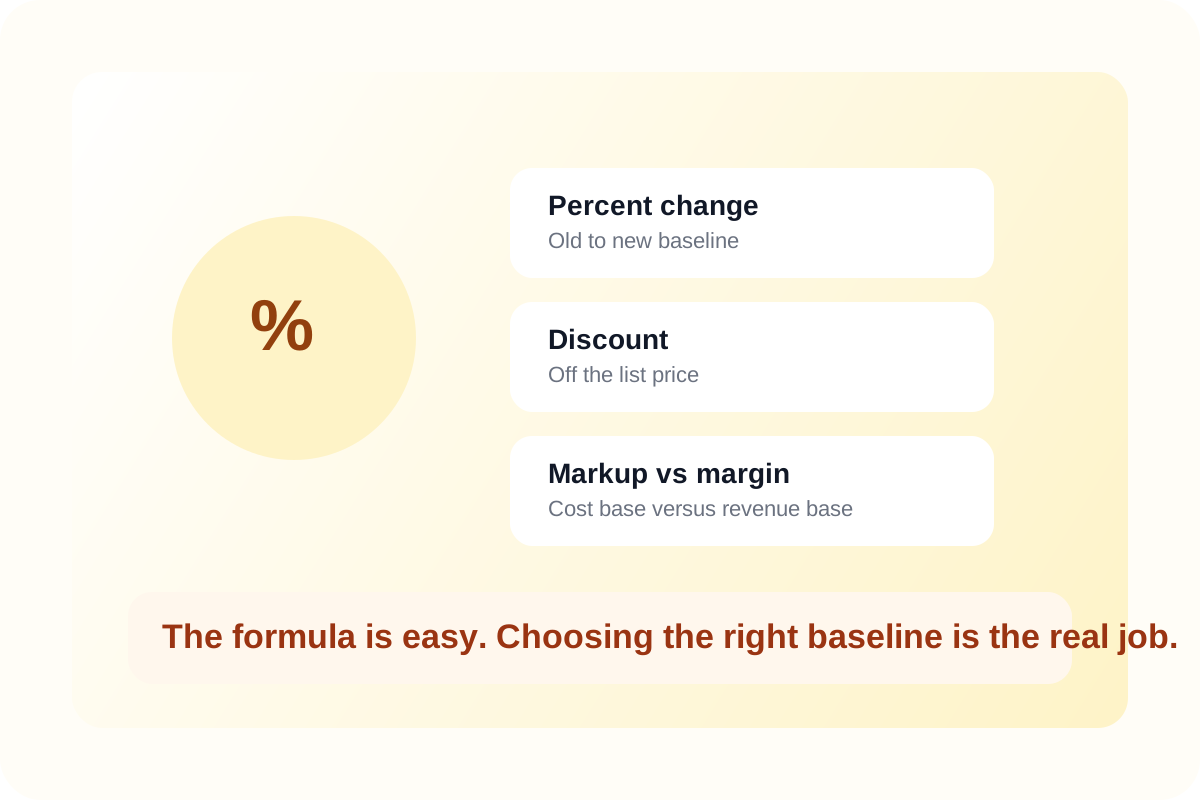
Percentage mistakes are dangerous because the numbers often look reasonable even when the question was wrong. A team says revenue was up 20 percent, but someone actually divided by the new total instead of the original baseline. A pricing note says 30 percent margin when the arithmetic was really a 30 percent markup. A discount, share-of-total, and change-from-baseline calculation can all produce tidy percentages while answering three different questions.
What this problem usually looks like
- A report mixes growth rate and share of total as if they were interchangeable.
- A pricing discussion uses markup language but compares it to a margin target.
- A discount figure is calculated from the wrong starting price.
- A dashboard note says 'up by x percent' without being clear about the original baseline.
Why the wrong percentage feels believable
Percentages compress a lot of context into one small symbol. Once the number looks neat, people stop asking what the base was. The real failure is usually not arithmetic skill. It is choosing the wrong relationship: part to whole, change from old to new, discount from list price, or profit relative to cost versus revenue.
A safer problem-solving sequence
- State the exact business question first: is this about change, contribution, discount, markup, or margin?
- Write down the baseline number in words before typing anything into the calculator.
- Run the percentage calculation only after the base and target values are explicit.
- Translate the result back into a sentence so you can hear whether it answers the original question correctly.
- If the number will be shared, keep the baseline in the note or chart label so readers do not have to infer it later.
Where this matters most
This matters in pricing, growth reports, marketplace discounts, campaign summaries, and operations dashboards because the wrong percentage can still look polished enough to survive review. A clean percentage workflow keeps the reasoning visible before the number turns into a slide or headline.
Related UtilFlow moves
Use Table Generator or a chart tool next when the percentage result needs a readable presentation. If several scenarios need side-by-side checking, keep the raw inputs visible instead of copying only the finished percentage into a note.
FAQ
What is the most common percentage mistake?
One of the most common mistakes is using the wrong base value, especially when people switch between percent change, discount, markup, and margin without noticing the baseline changed.
Why do markup and margin get confused so often?
Because both are expressed as percentages around profit, but one uses cost as the base and the other uses revenue.
What should I write down before calculating a percentage?
Write down what the base is and what relationship you are measuring, because that choice determines whether the result answers the real question.