Read Hz, kHz, MHz, GHz, and RPM Correctly Before You Compare the Wrong Signal
Use a frequency converter when the label looks familiar but the scale changes so much that one wrong unit choice makes the comparison meaningless.
Open Frequency Converter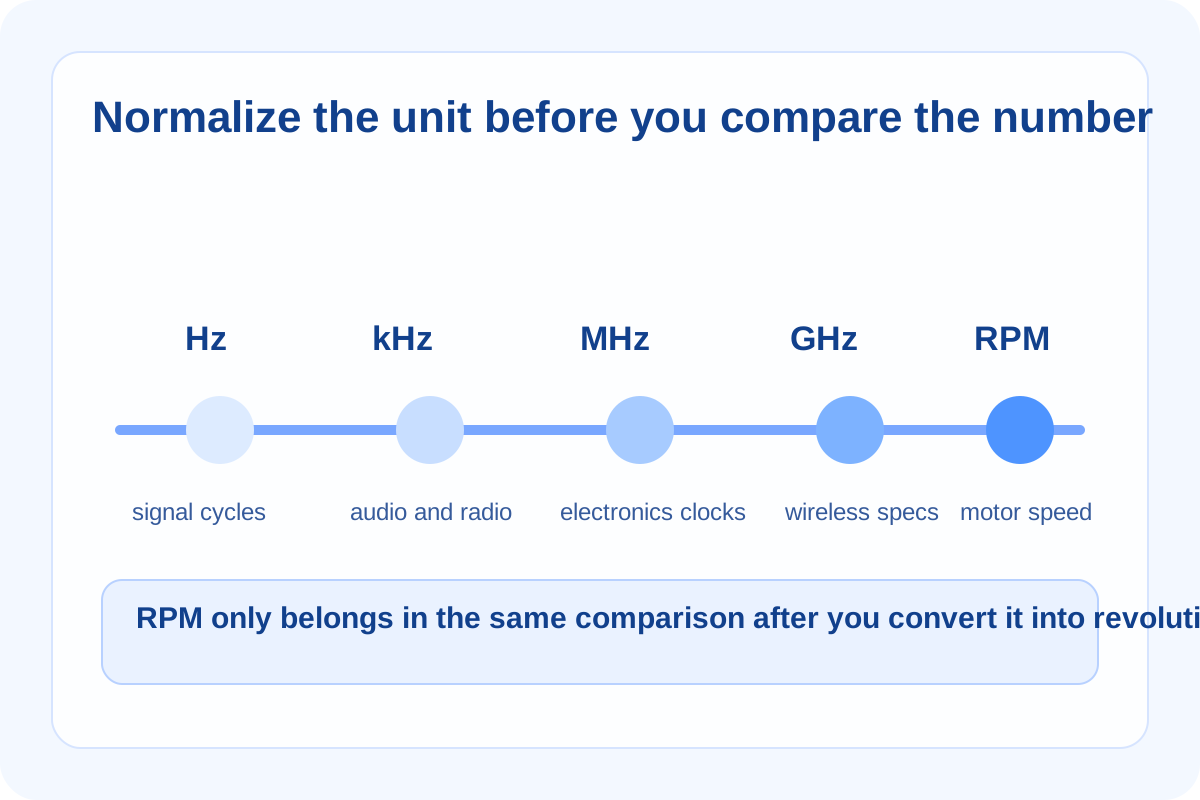
Frequency labels are deceptively readable. Everyone recognizes Hz, MHz, and RPM, but those symbols sit on very different scales and they describe different physical contexts. The technical mistake is not forgetting what hertz means. It is comparing values that were never normalized into the same unit first.
What the units are actually telling you
Hertz measures cycles per second. Kilohertz, megahertz, and gigahertz are just larger powers of that same base unit. RPM is rotations per minute, which means it can describe the same repeating behavior only after you convert it into per-second terms.
Where engineers and operators misread frequency data
- A motor spec is discussed in RPM while the controller or sensor output is described in hertz.
- An audio or electronics note mixes kHz and MHz, and somebody compares the raw numbers without adjusting the scale.
- A CPU, radio, or signal-chain discussion treats MHz and GHz as if the decimal placement were cosmetic instead of a thousand-fold step.
- A dashboard or worksheet strips the unit label and leaves only the number, which invites a bad comparison later.
A clean technical check
- Pick one target unit before comparing anything, usually Hz for fundamentals or MHz and GHz for larger electronics specs.
- Convert all source values into that unit before deciding which signal is faster, lower, noisier, or out of range.
- If RPM is involved, convert it through revolutions per second so the rate can be read on the same basis as hertz.
- Only after normalization should you judge whether the difference is small, large, or operationally meaningful.
Why this matters more than the raw number
A value of 60, 6000, or 2.4 can look harmless in isolation. The unit is what determines whether you are describing wall power, a motor, an audio tone, or a wireless clock speed. Without unit alignment, the number alone does not carry enough meaning to compare systems safely.
Related UtilFlow moves
If the next step is converting speed for a moving vehicle or travel estimate rather than a repeating signal, switch to Speed Converter. If you are checking power and energy specs together, pair this with Power Converter or Energy Converter so the labels stay consistent across the whole note.
FAQ
Why convert RPM to hertz before comparing it with a signal value?
Because RPM is per minute and hertz is per second, so the values are not directly comparable until they share the same time basis.
What is the main technical risk in frequency conversion?
The main risk is comparing raw numbers with different prefixes or time bases and treating them as if they describe the same scale already.
When is a frequency converter most useful?
It is most useful for electronics, audio, radio, motors, and any workflow where repeated cycles are reported in more than one unit.