Normalize Fuel-Economy Units Before One Route Cost Looks Cheaper Than It Is
Use a fuel economy converter when MPG, L/100km, and km/L keep making one vehicle, route, or rental option look cheaper only because the units changed.
Open Fuel Economy Converter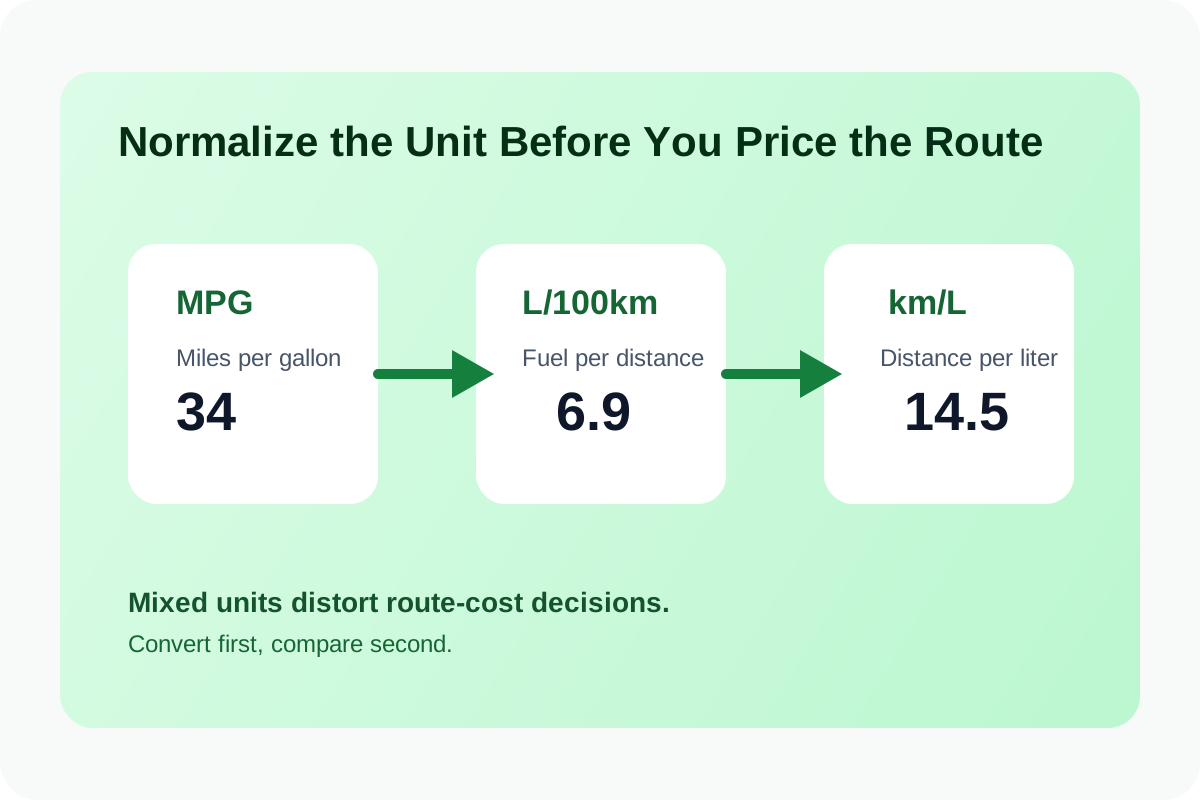
Fuel-cost decisions drift when the unit system changes in the middle of the conversation. A rental listing uses L/100km, a fleet spreadsheet uses mpg, and a driver message mentions km/L. The numbers feel comparable enough that people start estimating route cost from intuition instead of from one normalized measurement.
Why this problem keeps fooling people
These units do not move in the same direction. Higher mpg looks better. Lower L/100km looks better. Km/L flips the reading again. That means even a careful reader can compare the wrong thing if the notes mix units without a deliberate conversion step.
Where the mismatch causes real trouble
- A rental option looks cheaper for a road trip only because the quote used a different unit system than the comparison car.
- A fleet report makes one route seem inefficient because the source values were pasted into one sheet without normalization.
- A procurement discussion compares global vehicle specs from different markets and assumes the numbers are already equivalent.
- A reimbursement or delivery-cost estimate drifts because fuel-use notes came from drivers accustomed to different local measures.
The practical fix
- Pick one target unit for the whole decision before comparing any values.
- Convert each quoted figure into that shared unit and label the converted results clearly.
- Keep the original number nearby only as a reference, not as the basis of the comparison.
- Then compare route cost, tank range, or budget impact from the normalized set instead of from the mixed raw notes.
What the converter does not settle
The converter removes the unit ambiguity, but it does not decide which vehicle or route is best. Driving conditions, payload, fuel price, and maintenance still matter. The real gain is that at least the comparison stops lying before those larger tradeoffs begin.
Related UtilFlow moves
If the same estimate also depends on distance or volume, convert those units separately before you calculate total trip cost. Treat the fuel-economy conversion as one normalization step inside a broader logistics or budgeting workflow.
FAQ
Why should I convert fuel economy units before comparing vehicles or routes?
Because mixed units can make one option look better or worse purely because the measurement system changed, not because the actual efficiency changed.
Why does lower L/100km mean better efficiency?
Because that unit measures fuel consumed over a fixed distance, so a smaller number means less fuel used for the same trip.
What should I compare after converting the units?
Compare route cost, expected fuel spend, tank range, and the operating assumptions that still matter after the numbers are normalized.