Fix the Rotation Spec Before Degrees and Radians Send the Mockup Sideways
Use an angle-conversion problem workflow when the number in the design note looks reasonable, but the destination code, chart, or animation surface expects a different unit entirely.
Open Angle Converter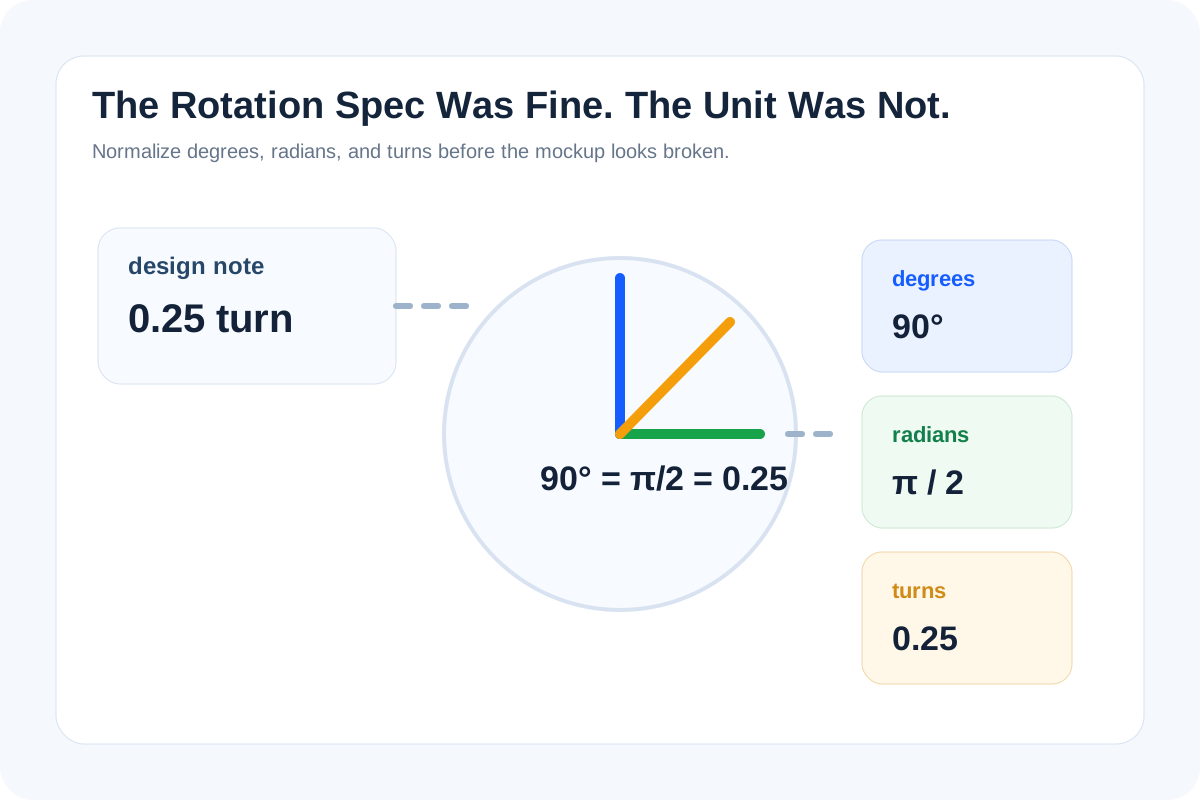
Rotation bugs often get blamed on rendering, layout, or animation code before anyone checks the unit. The note says rotate 0.25, the developer reads that like degrees, the tool interprets it as turns, or the formula expects radians and the mockup ends up sideways enough to look broken. The problem survives because every number still looks like a plausible amount of rotation until you compare the unit language around it.
Why this problem wastes debugging time
A unit mismatch produces output that is wrong but not random. That makes people debug the implementation path instead of the input. The visual result feels close enough to investigate transforms, easing, or coordinate math when the real fix is converting one value before it ever enters the destination system.
Where the mismatch usually appears
- A design handoff describes a quarter turn while the implementation surface wants degrees.
- A trigonometry-based formula expects radians but the copied value came from a human-readable note in degrees.
- A charting or drawing tool uses one angular convention while the source data or documentation uses another.
- A later editor copies the number only and strips away the unit label that originally made the instruction clear.
A safer rotation handoff
- Keep the original unit attached to the source note before moving the value anywhere else.
- Convert the value into the exact unit required by the next tool, code path, or formula.
- Test one known checkpoint such as a quarter-turn to verify direction and scale before adjusting the rest of the work.
- Write the converted value back with its unit label so the next edit does not restart the mismatch.
What this problem is really telling you
The bug is often not in the rotation engine. It is in the handoff contract. Once the source and destination units are normalized, many mysterious rotation errors disappear without any deeper geometry work.
Related UtilFlow moves
If the task is image framing rather than raw angular math, check Aspect Ratio Calculator next so size and proportion do not create a second visual bug. If the issue lives in CSS or markup afterward, use CSS Formatter or HTML Formatter so the structural context is readable before you keep debugging.
FAQ
Why can a degree-radian mix-up look like a rendering bug?
Because the result is consistently wrong rather than obviously impossible, which sends the investigation into the output instead of the input unit.
What is the safest way to hand off a rotation value?
Keep the source unit visible, convert the value for the destination system, and write the converted number back together with its unit.
What quick test should I use after converting an angle?
Use a simple known checkpoint such as a quarter-turn so you can confirm both the direction and the magnitude quickly.