Convert C to F Before a Weather, Oven, or Lab Reading Means the Wrong Thing
Use a temperature converter when the number itself looks reasonable but the scale changes the meaning enough to create a bad decision.
Open Temperature Converter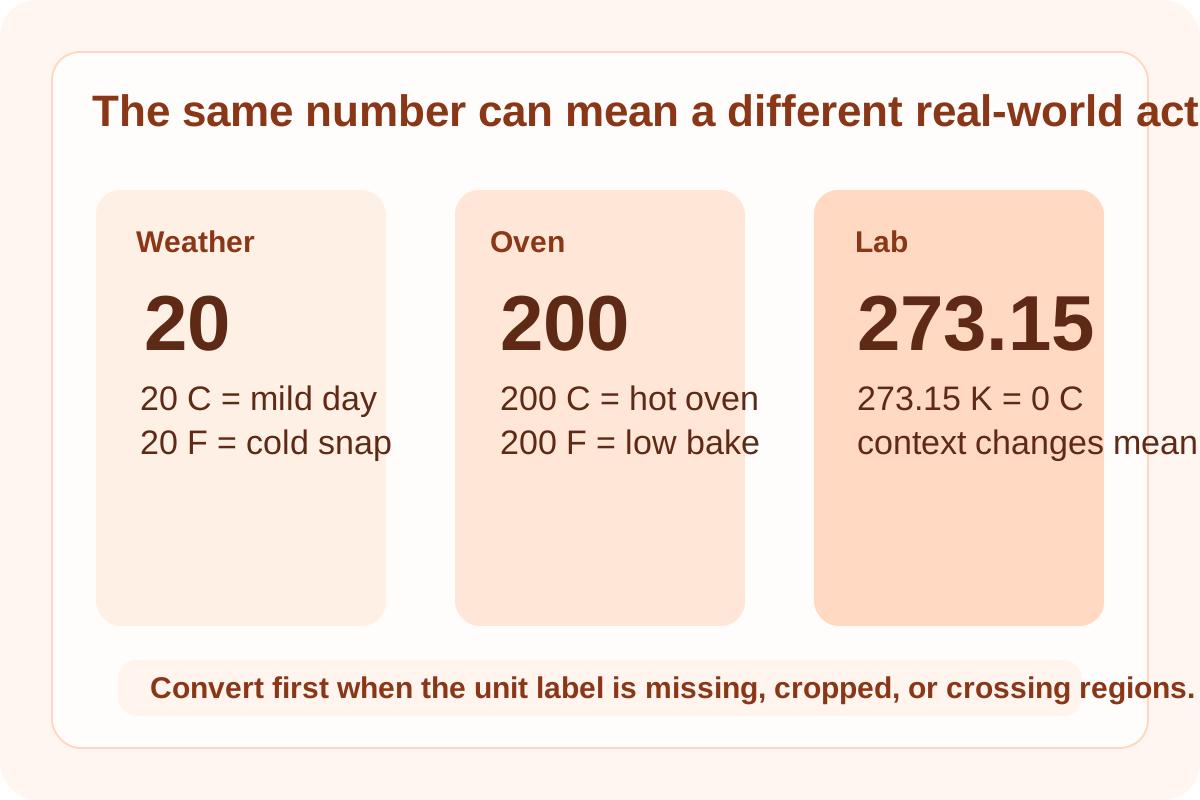
Temperature mistakes are dangerous because the number often looks believable either way. Twenty can describe a pleasant room in Celsius or a cold day in Fahrenheit. Two hundred can mean a hot oven in Celsius or a mild setting in Fahrenheit. The problem is not arithmetic difficulty. It is that the wrong scale still produces a number that feels plausible long enough to slip into action.
Where temperature confusion shows up in real work
- A recipe is copied from a site that uses Celsius, but the oven dial is read in Fahrenheit.
- A weather note, storage target, or shipping instruction crosses regions and the unit label disappears in chat or email.
- A lab or engineering value is recorded in Kelvin, then someone retells it informally in Celsius without converting it.
- A dashboard screenshot keeps the number but crops out the scale, so the next person reads the wrong meaning into it.
Why this problem survives common sense
Unlike some conversion errors, temperature mistakes do not always create obviously absurd outputs. The resulting number can still sit inside a vaguely familiar range, which is why people continue with the task instead of stopping to question the scale.
A safer interpretation workflow
- Keep the source scale attached to the original reading before you rewrite it anywhere else.
- Convert the value into the destination scale immediately instead of estimating from memory.
- Store both versions when the value will pass through several people or systems.
- Check the surrounding context after conversion: weather, oven, freezer, body temperature, and lab ranges each imply different normal bands.
Related UtilFlow moves
If the real issue is liquid measurement inside the same recipe or prep sheet, switch to Cooking Converter next. If you are translating time on a cooking, storage, or testing step as well, pair the result with Time Converter so the schedule does not drift after the scale is fixed.
FAQ
Why are temperature conversion mistakes easy to miss?
Because the wrong scale can still produce a number that looks plausible in isolation, especially when the surrounding label is missing.
Should I keep both Celsius and Fahrenheit in shared notes?
Yes when the value will be read by different audiences or devices, because it preserves the source meaning and reduces interpretation mistakes.
When is a temperature converter most useful?
It is most useful for recipes, weather, storage instructions, equipment settings, and lab or engineering readings that move between scales.