Why YAML Indentation Breaks Configs Before They Reach CI
Understand what YAML Formatter helps normalize, which mistakes still matter, and why whitespace problems keep breaking copied config snippets.
Open YAML Formatter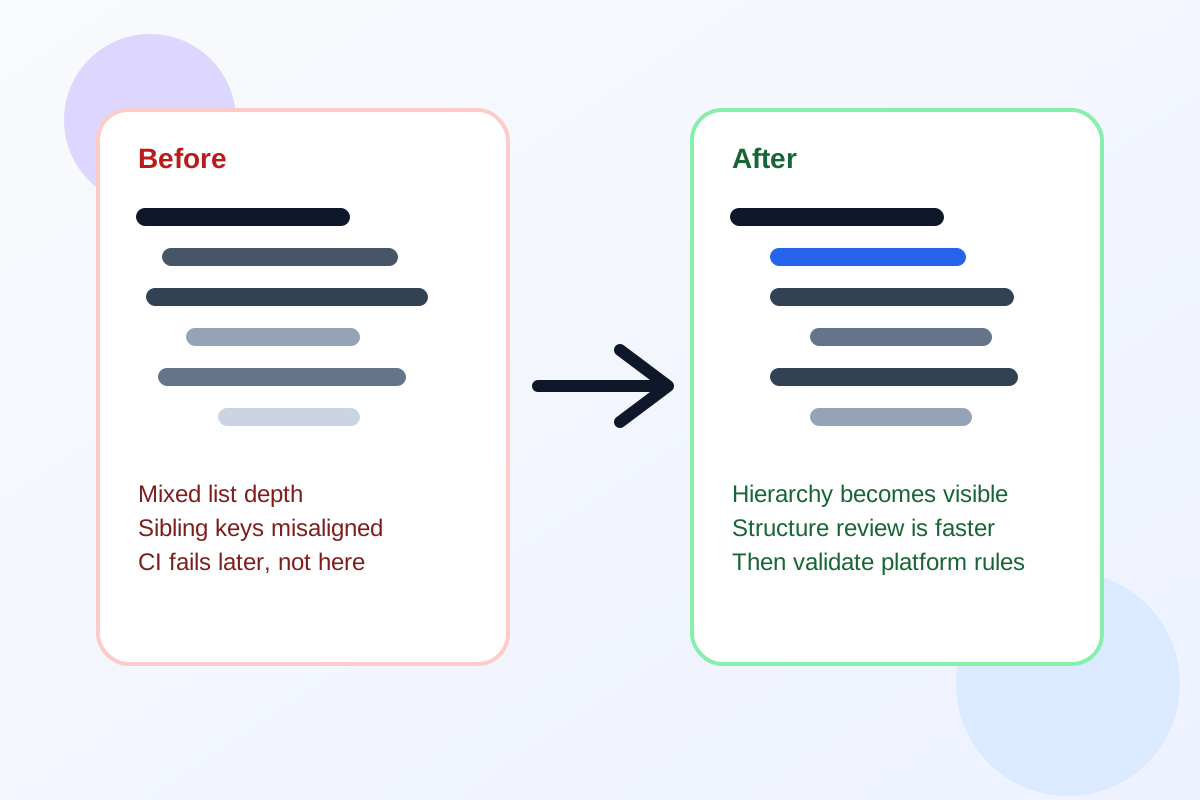
YAML breaks in quiet ways. A copied block may look almost correct, but one extra space, a list item at the wrong depth, or an inconsistent line alignment can change how the parser reads the structure. That is why configuration problems often show up later in CI, deployment, or a hosted workflow instead of at the moment the snippet is copied.
What YAML Formatter helps normalize
- It makes nested structure easier to inspect by restoring cleaner indentation.
- It helps separate structural problems from content problems by making the hierarchy visible again.
- It reduces the risk of pasting oddly spaced YAML from chat, docs, tickets, or AI-generated examples.
- It gives you a readable checkpoint before the snippet is committed into a workflow file or config directory.
What formatting does not magically fix
Formatting does not tell you whether a platform expects a different key name, a different value type, or a missing required block. It also does not solve parser rules for every YAML edge case. The useful technical role of the formatter is narrower: make the structure readable enough that obvious indentation and list-shape problems can be caught before the config reaches a stricter environment.
Where indentation errors usually appear
- Workflow files where one step slips outside the jobs or steps block.
- Deployment configs copied from docs with mixed spaces around list items.
- Frontmatter or settings blocks created from rough notes or AI output.
- Merged snippets where one nested mapping is aligned to the wrong parent key.
A practical technical check
Paste the smallest failing YAML block into the formatter first. Make the hierarchy readable, compare list depth and sibling keys, then paste the cleaned version back into the real config. That keeps structural debugging separate from platform-specific validation.
FAQ
Why does YAML fail even when the words are correct?
Because YAML depends heavily on indentation and nesting. Correct key names can still fail when they sit at the wrong depth.
Can formatting prove the config is valid for my platform?
No. It helps expose structure, but platform validation still depends on required keys, value types, and service-specific rules.
When should I use YAML Formatter in the workflow?
Use it right after copying or generating a snippet and before committing it into CI, deployment, or configuration files.