What XML to JSON Keeps, Loses, and Renames During Conversion
Understand what changes when XML becomes JSON so attributes, repeated nodes, and mixed content do not surprise you in the next system.
Open XML to JSON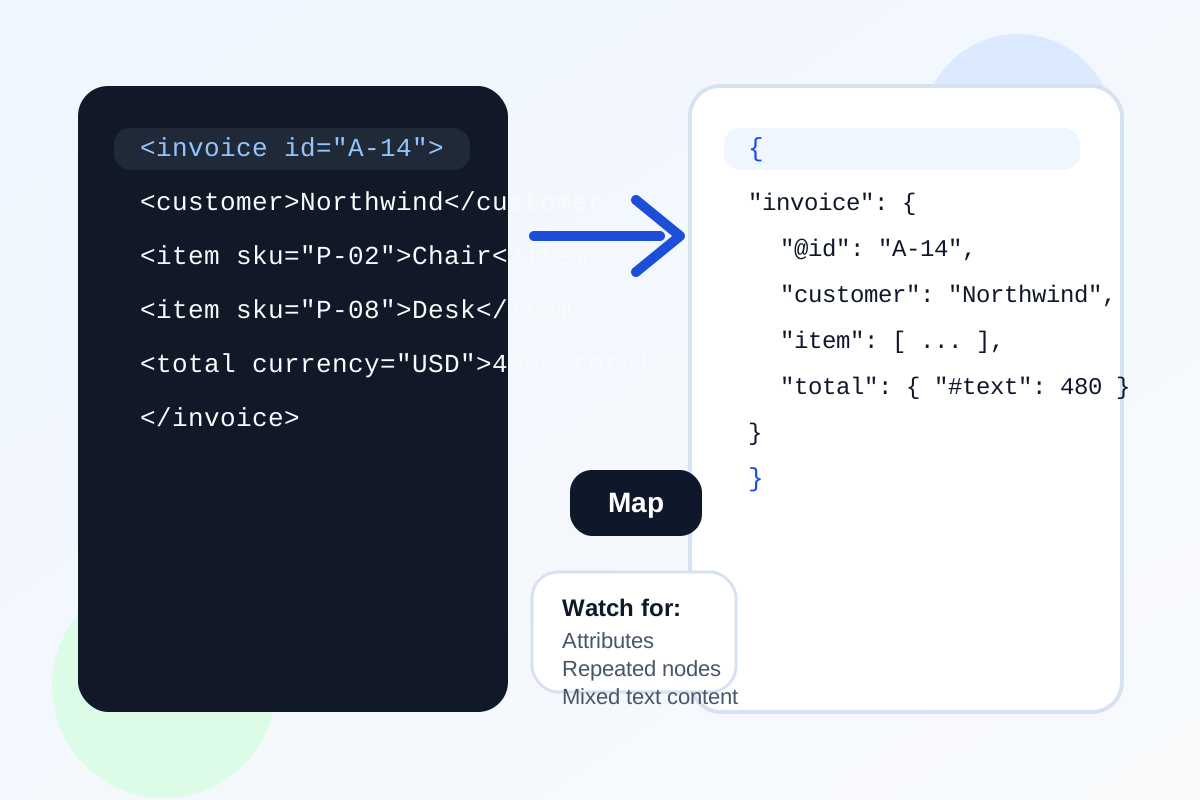
XML and JSON can represent the same business data, but they do not express structure in the same way. Converting between them is usually straightforward for simple trees and much less straightforward for attributes, repeated nodes, namespaces, and text mixed with child elements.
What usually maps cleanly
- Nested XML elements usually become nested JSON objects.
- Repeated sibling elements often become arrays.
- Plain text content inside a simple element often becomes a string or number value.
- Parent-child hierarchy usually survives even when the surface syntax changes.
Where conversion gets opinionated
XML does not have one universal JSON equivalent. A converter has to choose how to represent attributes, whether repeated tags become arrays immediately, how to keep text values when an element also has metadata, and whether namespaces stay visible. That means two XML-to-JSON tools can both be valid while still producing different shapes.
The three structures worth checking after every conversion
- Attributes: they may become keys with prefixes, nested metadata objects, or flattened properties.
- Repeated elements: they may become arrays only when more than one instance exists, which can create unstable shapes downstream.
- Mixed content: text plus child tags can turn into special fields such as text markers instead of one simple scalar value.
Why this matters in real workflows
Most problems appear after conversion, not during it. An API test may expect an array but receive one object. A config import may break because attribute names were prefixed differently. A downstream script may read the visible text but miss the field that now holds the actual value. Reading the JSON shape before copying it forward avoids that class of mistake.
FAQ
Does XML to JSON conversion always keep the same structure?
It keeps the underlying hierarchy, but the exact JSON shape can vary because attributes, arrays, and mixed content need representation choices.
Why do repeated XML tags sometimes not become an array?
Some converters only emit an array when there are multiple siblings, which means a one-item case can look different from a many-item case.
What should I verify before using converted JSON in code?
Check arrays, attributes, text fields, and any special keys introduced by the converter before you rely on the shape in code or an import flow.