Use a Regex Cheat Sheet to Build the Pattern Before You Debug the Edge Case
A regex cheat sheet is most useful before the pattern grows complicated, when you still need to choose the right anchors, classes, groups, and quantifiers on purpose.
Open Regex Cheat Sheet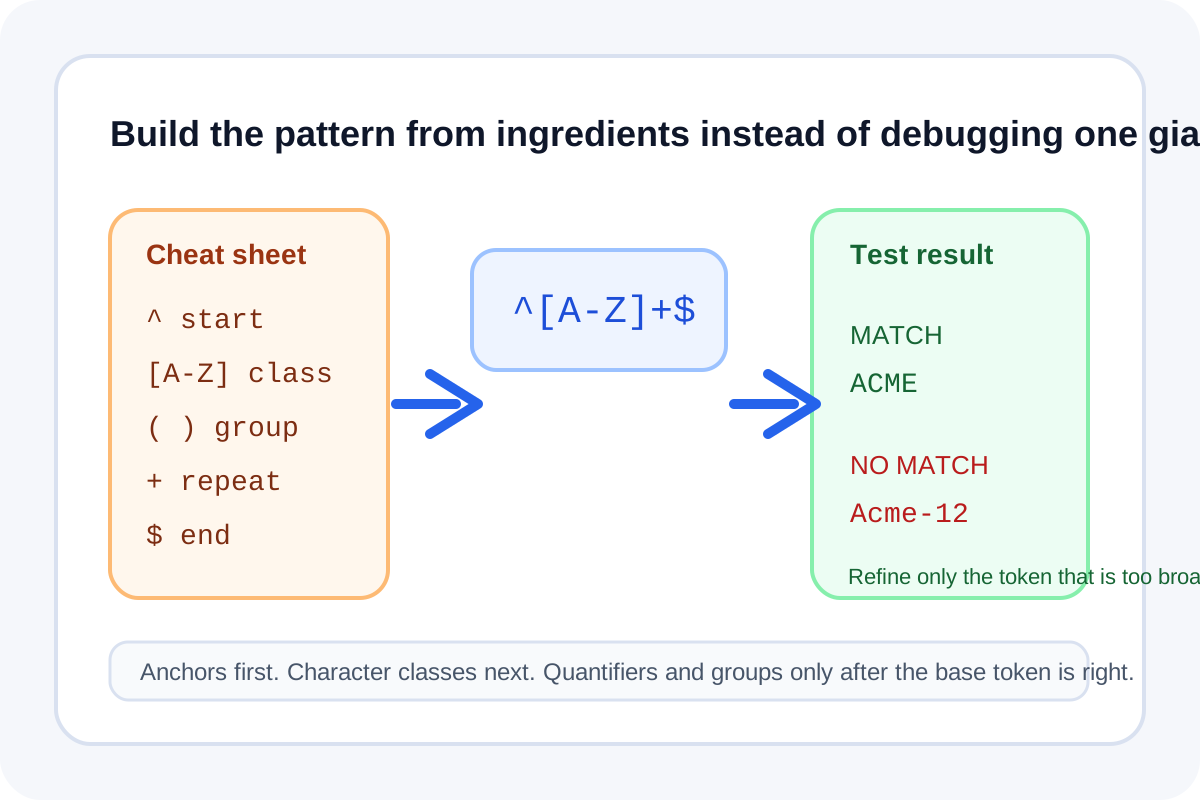
Regex work goes wrong when the pattern jumps from an idea to a dense expression with no checkpoints. A cheat sheet helps most at the beginning, when you are still deciding whether the job needs anchors, character classes, optional groups, or a repeating token instead of guessing and then debugging everything at once.
Start from the smallest valid match
- Define the exact text shape you need to accept, not just the examples you happened to copy.
- Pick anchors first if the match should cover a full field rather than a substring.
- Choose character classes that are narrow enough for the rule you mean.
- Add quantifiers and groups only after the base token matches the right unit.
A practical regex workflow
- Use the cheat sheet to choose one token family at a time: anchors, classes, groups, alternation, or quantifiers.
- Write the first version for the normal case before worrying about every edge case.
- Test against one value that should match and one that should fail.
- Refine only the part that is too broad or too narrow instead of rewriting the whole pattern.
Why this beats memorizing snippets
Copied regex fragments often bring hidden assumptions from another language, validator, or field format. Understanding the building blocks makes it easier to adapt the pattern for email-like identifiers, paths, tags, dates, or search rules without carrying over accidental behavior.
Where the cheat sheet fits with testing
The cheat sheet explains the ingredients. A tester proves whether the assembled pattern behaves correctly on real examples. Use the cheat sheet to decide the syntax, then move into a regex tester when you want to validate captures, boundaries, or edge cases.
Related UtilFlow moves
Open Regex Tester once the pattern skeleton exists, or use Text Diff afterward when two similar patterns appear to behave differently and you need to compare them character by character.
FAQ
What should I decide before writing a regex?
Decide what counts as a valid match, whether the pattern should match the whole field or only part of it, and which characters are actually allowed.
Why is a cheat sheet better than copying a random regex?
Because it helps you choose syntax intentionally instead of inheriting hidden assumptions from a pattern built for someone else’s input.
When should I switch from the cheat sheet to a tester?
Switch once you have the first draft of the pattern and need to verify how it behaves on matching and failing examples.