Test One Regex Against Real Samples Before You Clean a Column, Parse a Log, or Ship a Rule
Use a practical regex tester tutorial to validate one pattern against real examples before it rewrites data, extracts the wrong value, or misses the edge case that matters.
Open Regex Tester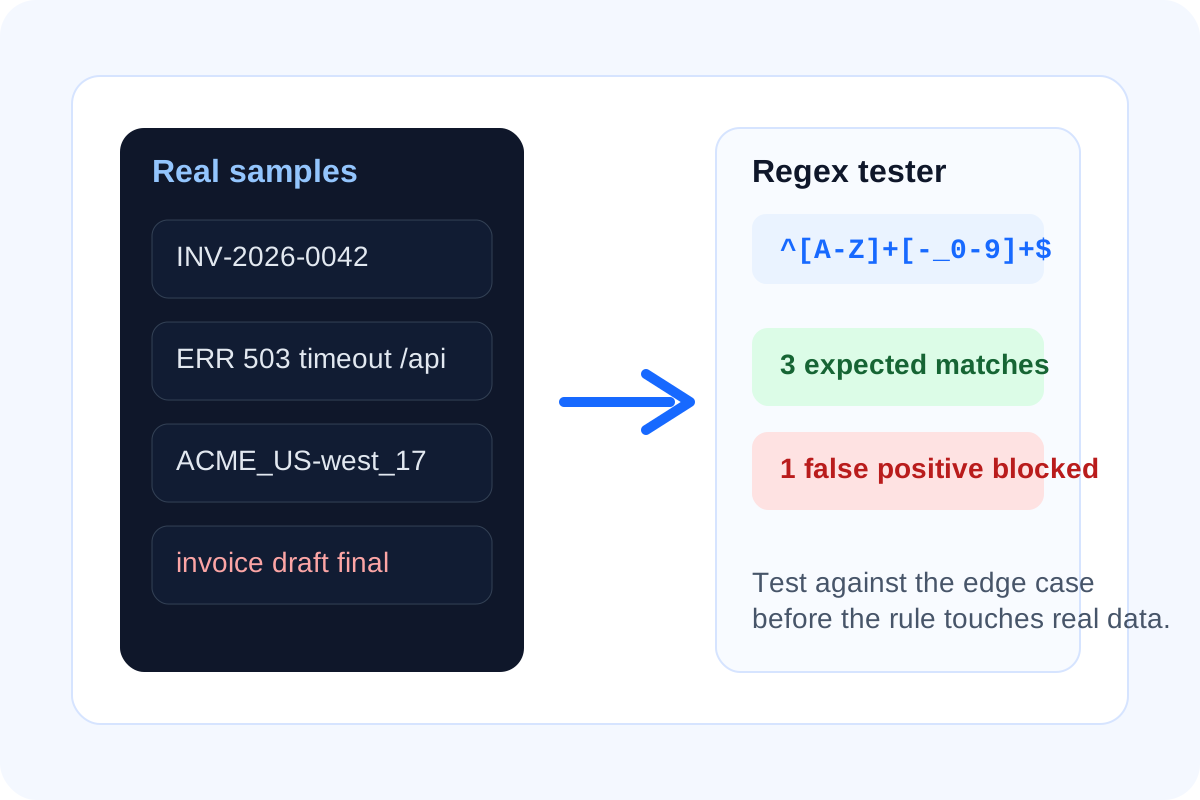
A regular expression often looks correct right up until one real sample breaks it. That is why the useful job of a regex tester is not proving that a pattern matches one happy-path string. The useful job is checking the pattern against the messy values it will actually see in a column, a log line, a pasted list, or a validation rule.
Start with the sample set, not the finished pattern
Collect the shortest group of examples that can expose the rule. Include one valid sample, one obvious invalid sample, one edge case with punctuation or spacing, and one sample that looks similar but should not match. Those four lines usually teach more than staring at the syntax alone.
A practical regex tester tutorial
- Paste the real samples first so you can see the variation you are trying to control.
- Write the smallest pattern that captures the target instead of optimizing for cleverness.
- Turn flags on or off deliberately when case sensitivity, line boundaries, or global matching changes the result.
- Check both false negatives and false positives before you copy the pattern into code, a spreadsheet cleanup, or a rule-based tool.
- Save or note one failing sample so the next revision can be tested against the exact edge case that caused trouble.
Three places this prevents bad downstream work
- Parsing logs where one optional token can shift the captured group and hide the real error code.
- Cleaning spreadsheet columns where a broad pattern can remove valid identifiers along with the junk rows.
- Validation rules where a pattern appears to work until a hyphen, underscore, or country-specific format arrives.
What a tester reveals faster than code review
A tester makes pattern behavior visible line by line. You can see whether anchors are too strict, whether a character class is too broad, and whether a repeated group is consuming more text than intended. That short feedback loop is often faster than pushing the same experiment through application code or a larger transform pipeline.
Related UtilFlow moves
Use Regex Cheat Sheet when you need a quick syntax reference before writing the next revision. If the extracted values still need cleanup after matching, move into Text Cleaner or Line Sorter once the regex has isolated the right lines.
FAQ
What samples should I test a regex against first?
Test one valid sample, one invalid sample, one edge case, and one look-alike value that should not match.
Why is a regex tester better than checking one example in code?
Because it exposes match behavior across several real samples immediately, which makes false positives and missed edge cases easier to spot.
What is the most common regex testing mistake?
Treating one successful match as proof that the pattern is safe, instead of checking the pattern against the messy values it will actually encounter.