Standardize Field Names Before You Map Spreadsheet Columns Into Code
Use a case converter to turn rough labels into cleaner field names before spreadsheet columns, CSV headers, and UI copy become code or config keys.
Open Case Converter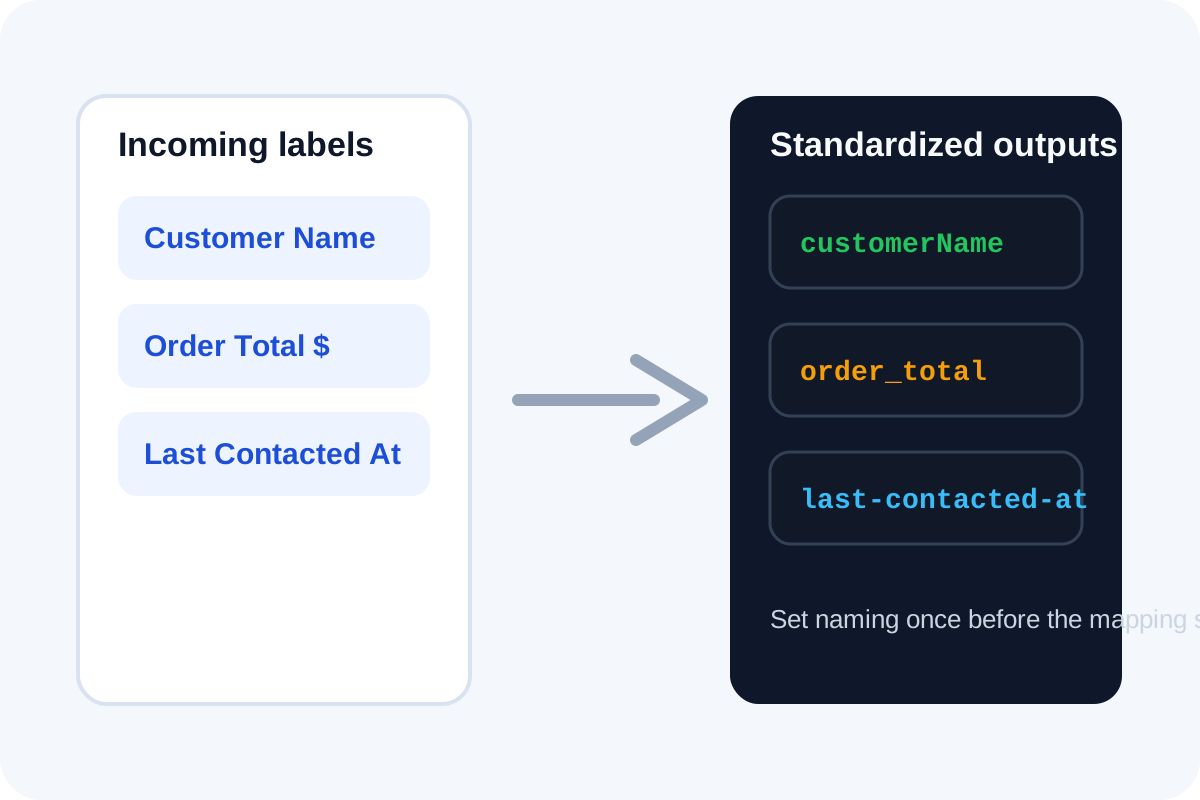
Field naming problems usually start outside the codebase. A spreadsheet arrives with headings like Customer Name, Order Total $, or Last Contacted At, and someone has to turn those labels into stable keys for JSON, database columns, analytics events, or UI config. A case converter helps you standardize that handoff before inconsistent names spread through the implementation.
Where case conversion saves time
- Turning spreadsheet or CSV headers into camelCase properties for app code.
- Creating snake_case keys for exports, ETL steps, or database-oriented payloads.
- Generating kebab-case names for URLs, config flags, or CSS-facing labels.
- Normalizing titles and sentence case when copied text needs cleaner presentation before review.
A practical naming workflow
- Paste the original label exactly as it appears in the source file.
- Choose the target case based on where the name will live next: camelCase for JavaScript, snake_case for many data pipelines, PascalCase for type names, or kebab-case for URL-like strings.
- Check whether abbreviations such as ID, API, or SKU should stay readable after conversion.
- Copy the converted result into your mapping sheet, payload example, or code stub before you build the rest of the structure.
Why this is better than renaming as you go
Ad hoc renaming causes small mismatches that are hard to spot later: one file uses customerId, another uses customer_id, and a third keeps Customer ID as copied text. Standardizing names early reduces avoidable mapping bugs, review noise, and back-and-forth over conventions that should have been settled at the handoff point.
Related UtilFlow steps
After cleaning names, use CSV JSON Converter when the structure itself needs to move between formats, or Code Formatter when the mapped object should be pasted into a readable snippet for review.
FAQ
When should I use camelCase versus snake_case?
Use the convention expected by the system you are handing off into. JavaScript and many front-end configs usually prefer camelCase, while some backend, export, and database workflows prefer snake_case.
Can a case converter help with spreadsheet cleanup?
Yes. It is useful when raw spreadsheet headers need to become predictable field names before import, mapping, or code generation.
What should I check after converting a label?
Check that important abbreviations, numbers, and separators still read clearly and that the target case matches the destination system.