How to Use MD5/SHA256 Hash in a Practical Online Workflow
Generate MD5 and SHA256 hashes. Learn when this tool is useful, what problems it solves, and how to fit it into a practical online workflow.
Open MD5/SHA256 Hash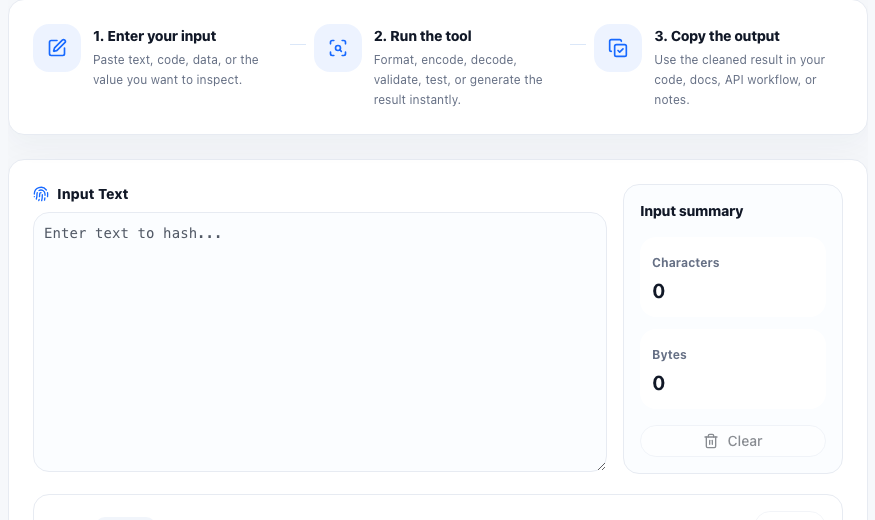
MD5/SHA256 Hash is useful when you are debugging an API response and need a fast way to handle the task without switching into a heavier workflow. Generate MD5, SHA-256, and SHA-512 hashes from text. Use it to compare checksums, create deterministic identifiers, inspect signatures, or verify copied values.
The real problem this helps solve
Small formatting and validation mistakes can slow down debugging because the issue is often hidden inside copied text, encoded values, generated snippets, or configuration data.
For mD5/SHA256 Hash tasks, the important part is not only running the tool. The useful result is a cleaner output that can be used in a report, document, codebase, upload form, message, or review process without creating extra manual work.
A practical workflow
- Enter your input: Paste text, code, data, or the value you want to inspect.
- Run the tool: Format, encode, decode, validate, test, or generate the result instantly.
- Copy the output: Use the cleaned result in your code, docs, API workflow, or notes.
Technical notes
Most browser-based developer utilities work by transforming text in memory, which makes them useful for quick checks where installing a package or opening an IDE would be slower.
Hashes are useful for checksums, comparing text, creating deterministic IDs, verifying copied content, and debugging signature-related workflows.
Searches this guide helps answer
- md5 hash generator
- sha256 hash generator
- generate file hash
- text hash generator
Related workflow ideas
This task often connects with Base64 Encode/Decode, Base64 Image Encoder, URL Encode/Decode, HTML Entity Encoder/Decoder. Use them together when the job needs more than one cleanup, conversion, validation, or export step.
FAQ
When should I use MD5/SHA256 Hash?
Use MD5/SHA256 Hash when you need to generate MD5 and SHA256 hashes. It works best when you want a quick online workflow with clear input and output.
What should I check before copying the result?
Check that the input is complete, the selected options match your goal, and the output includes the labels, formatting, or file structure needed for the next step.
Can MD5/SHA256 Hash be part of a larger workflow?
Yes. Many users combine it with related UtilFlow tools when they need to clean, convert, validate, compress, extract, or prepare content before sharing it.