Count Deadlines Backwards With a Date Calculator Before You Miss a Notice Window
Use a date calculator when the risky part of a timeline is the hidden date before the final deadline: notice periods, cancellation windows, review buffers, and ship-by cutoffs.
Open Date Calculator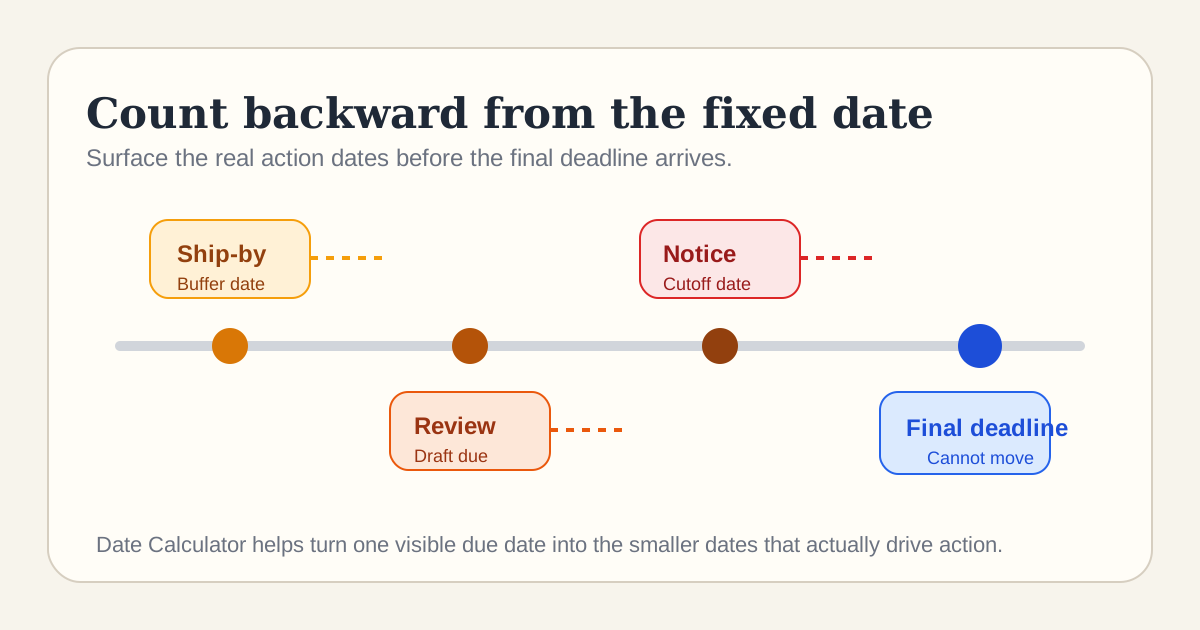
Many timeline mistakes happen before the visible due date. The contract may require thirty days notice, the client may need a review draft three business days earlier, or the shipper may need a pickup buffer before the final event. A date calculator is useful because it turns one visible deadline into the smaller checkpoint dates that the real workflow actually depends on.
The practical problem
A due date by itself is often misleading. Teams remember the launch date, filing date, renewal date, or cancellation date, then miss the quieter date that mattered more. The operational risk is usually the hidden earlier date, not the final milestone printed on the calendar.
A backward-planning workflow
- Start from the fixed date that cannot move, such as the submission deadline, contract renewal, event date, or release date.
- Count backward for the hard requirements first: notice periods, review buffers, legal sign-off, print lead time, or shipment pickup.
- Add one small safety margin when the upstream handoff depends on another person, office, or vendor.
- Write down the derived dates with labels instead of keeping them as raw offsets so each checkpoint can be shared clearly.
Where the errors usually happen
- Someone counts from today instead of the actual fixed deadline.
- The team treats calendar days and business days like the same thing in conversation.
- An approval buffer exists informally but never becomes a date on the plan.
- One person updates the final deadline without recalculating every upstream checkpoint.
Why this is more useful than quick mental math
The point is not arithmetic pride. The point is exposing the dates that trigger action. Once those checkpoint dates exist, they can move into a checklist, calendar, project update, or release note instead of living as rough guesses in chat.
Related UtilFlow moves
After calculating the dates, use Checklist Maker for a handoff sequence or Calendar Maker when the derived schedule needs a shareable monthly view for the rest of the team.
FAQ
When should I count backward instead of forward with a date calculator?
Count backward when the final milestone is fixed and you need to surface the earlier action dates that protect it.
What should I label after calculating the dates?
Label each result by job, such as review draft, notice cutoff, ship-by date, or approval deadline, so the numbers stay tied to a real decision.
Why do timeline mistakes still happen when everyone knows the final due date?
Because the missed step is often an earlier dependency date that never became visible in the plan.