Check JWT Claims Before You Blame Cookies, Middleware, or Session State
Decode a JWT first so expiration, audience, tenant, and role mistakes surface before auth debugging spreads into the wrong layer.
Open JWT Decoder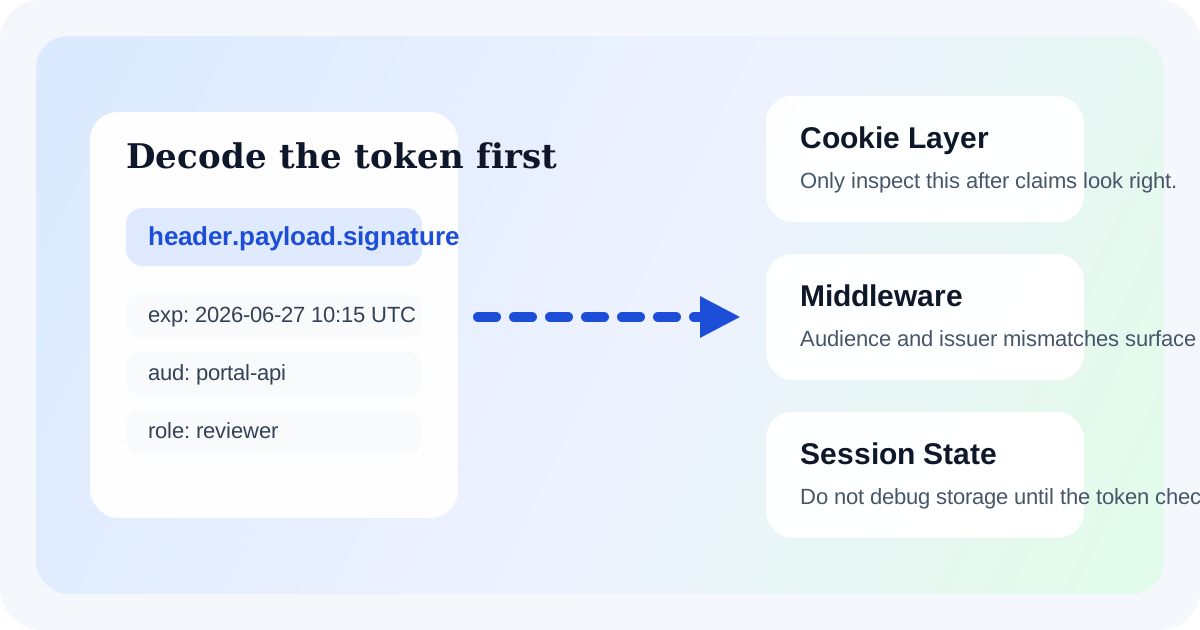
Auth bugs often spread sideways because the first failure is vague. A user is signed out, a request returns 401, or one environment works while another does not. The fastest first move is usually to decode the JWT and read the claims before you open five tabs for cookie flags, middleware branches, session storage, and API permissions.
Start with the visible claims
- Check exp, nbf, and iat first when the bug feels time-based or environment-specific.
- Compare aud and iss with the service or middleware configuration that is actually rejecting the request.
- Look for role, scope, tenant, org, or plan claims that drive authorization later in the request path.
- Confirm the token still has three segments and was not copied with spaces, truncation, or a missing prefix cleanup step.
A JWT triage workflow
- Decode the exact token that failed, not a fresh token from another session.
- Write down the expected audience, issuer, and role claims before comparing them with the payload so you do not rationalize a mismatch after the fact.
- If the payload already explains the failure, fix token issuance or environment configuration before touching cookie and session code.
- Only move to transport debugging after the claims look correct but the app still rejects the request.
What this rules out quickly
This workflow separates token-content problems from transport problems. An expired token, wrong audience, stale tenant ID, or missing role claim will not be repaired by changing a SameSite cookie rule or rewriting middleware. Reading the payload early prevents that detour.
When to escalate beyond decoding
Once the readable claims look right, the next layer is signature validation, JWKS lookup, key rotation, clock skew, and session binding. That is the point where cookie flags, proxy headers, or middleware decisions become worth deeper investigation.
Related UtilFlow moves
Use Base64 tools if you need to inspect adjacent encoded values, JSON Formatter if a nested claim block needs clearer reading, and URL Parser if the token is moving through a callback or redirect URL during the auth flow.
FAQ
Should I decode the JWT before checking cookie settings?
Usually yes. If the token claims are already wrong, transport debugging will not fix the real issue.
Which JWT claims explain auth failures fastest?
Start with exp, nbf, iat, aud, iss, and any custom role, scope, tenant, or org claims your app depends on.
Why can a decoded JWT still fail?
Because decoding does not verify the signature, trust chain, key rotation state, or application-side authorization logic.